Boiled eggs & butterflies – a day out in Japan

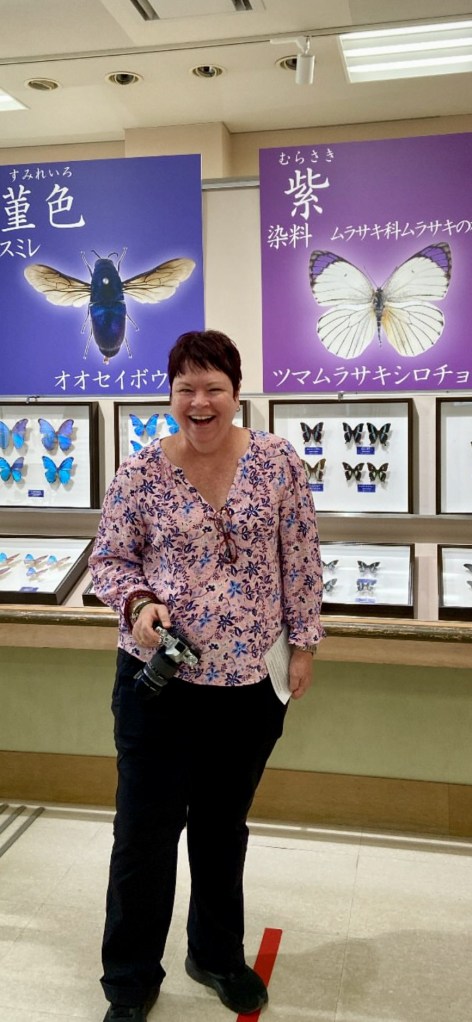
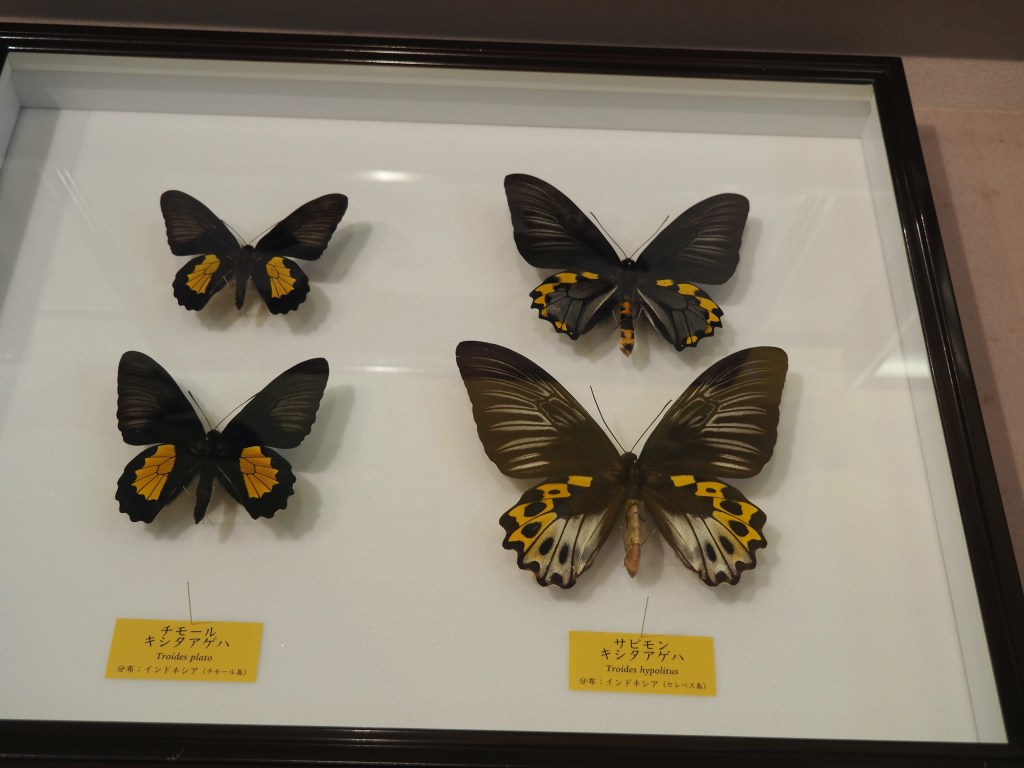
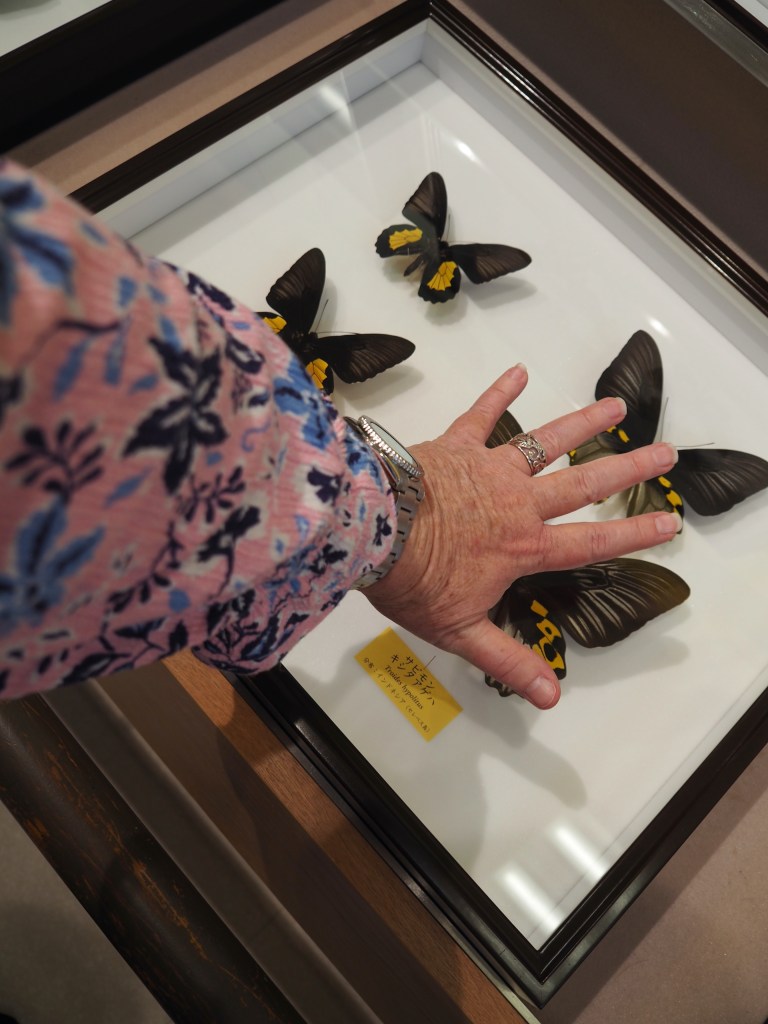
The author shares a memorable day in Japan, centered around a simple yet delightful breakfast at Rainbow Coffee House in Osaka, followed by a visit to Minoh Park. The tranquil atmosphere and charming service enhanced their experience. The highlight was exploring the Insectarium, where the family enjoyed a vibrant butterfly exhibit, leaving a lasting impression.

Tea and Toast at the Rainbow Coffee House, Osaka, Japan.
The Rainbow Coffee House, Osaka, Japan.

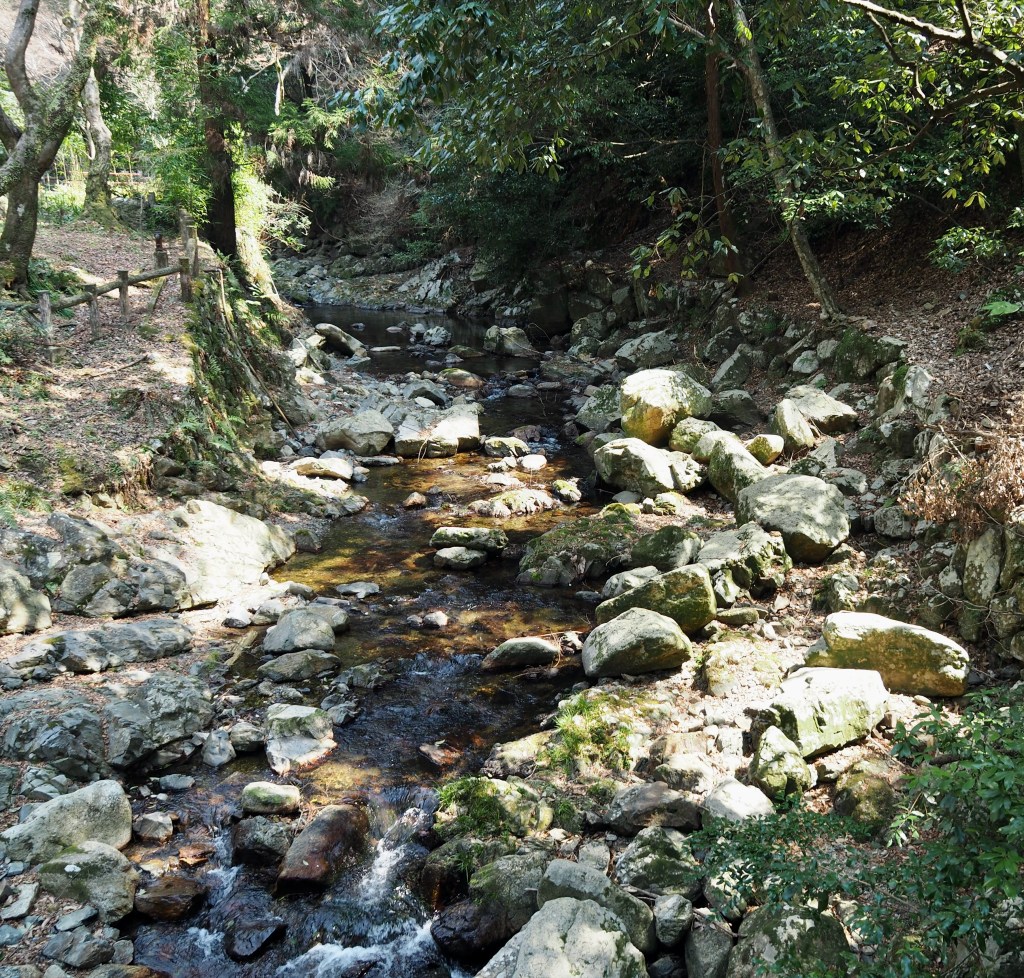
Minoh Park

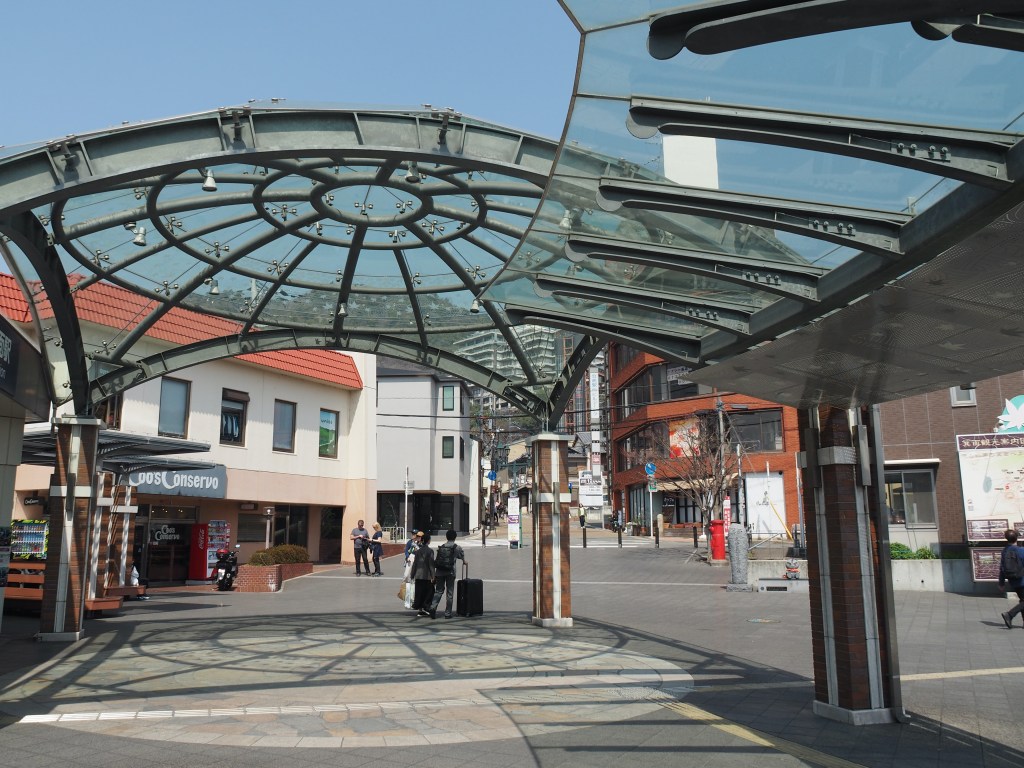
One of the Hankyu trains arriving at Minoh Station, Japan.


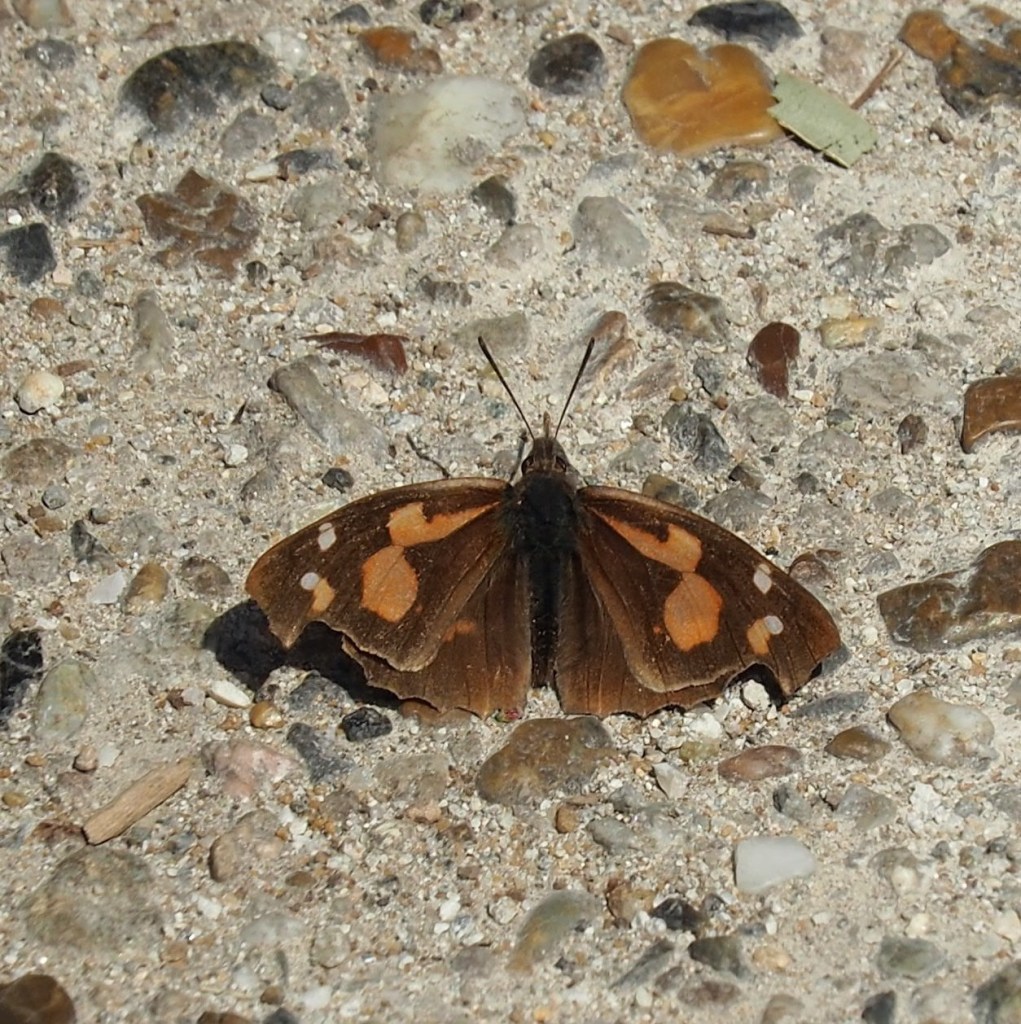
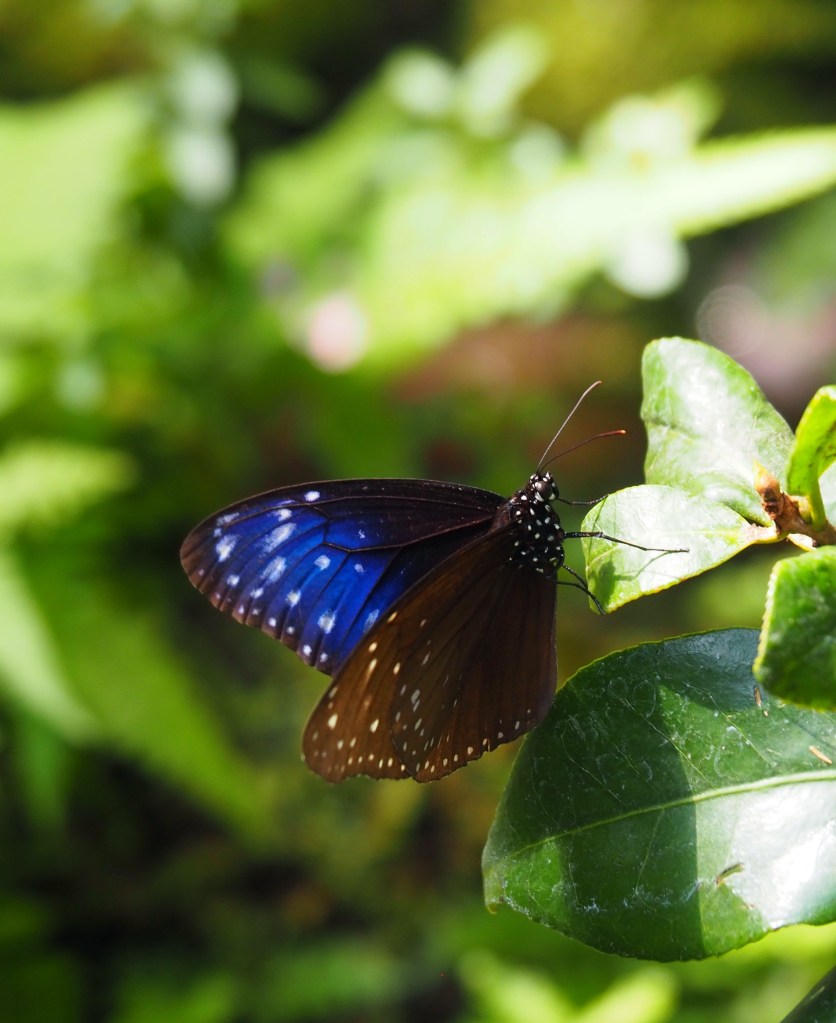
The Blue Tiger

The underside of a Blue Tiger, Magnetic Island, 18 June 2024. Photo: A. Fielding.
Blue Tiger, Magnetic Island, 18 June 2024. Photo: T. Fielding.

…all this existed before, has always existed, but you were unaware. You didn’t see.

Sharman Apt Russell
Photographing butterflies in the Butterfly Forest, Magnetic Island. Photo: T. Fielding, 2024.

…the air was for the space of 3 or 4 acres crowded with them to a wonderful degree: the eye could not be turned in any direction without seeing millions and yet every branch and twig was almost covered with those that sat still.

Joseph Banks
A surprise visitor to the garden, a Blue Tiger, 31 March 2024. Photo: T. Fielding.
A Blue Tiger, observed at Pallarenda, Townsville, 19 May 2024. Photo: T. Fielding.
Four Blue Tigers and one Purple Crow, Magnetic Island, 18 June 2024. Photo: T. Fielding.

  1. This location is believed to have been close to what is now Stanage Bay, about 175 km north of Rockhampton, Queensland. (See Robinson & Vane-Wright). ↩︎

A Sense of the Sublime – Burketown’s Saltpans

The Albert River, near Burketown, Queensland, 2021. © Trisha Fielding
Savannah Aviation charter flight over Burketown and gulf country, 2021.
Burketown, from the air, 2021. © Trisha Fielding
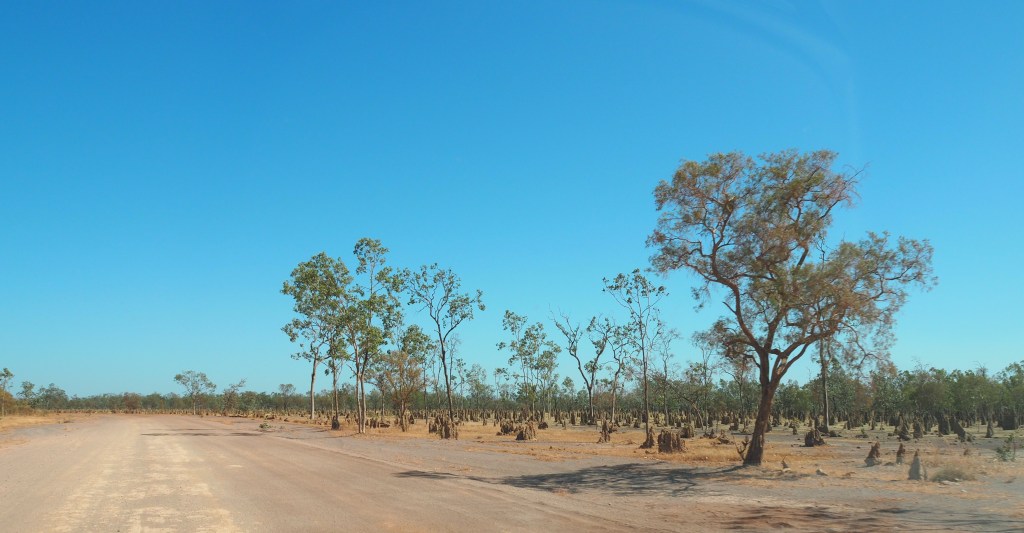
Grassland savanna, on the road somewhere between Normanton and Burketown, September 2021. © Trisha Fielding
Termite mounds on open savanna country, 2021. © Trisha Fielding

(These photos of the Wedge-tailed Eagle were taken on the road from Burketown to Cloncurry. Both images © Trisha Fielding)

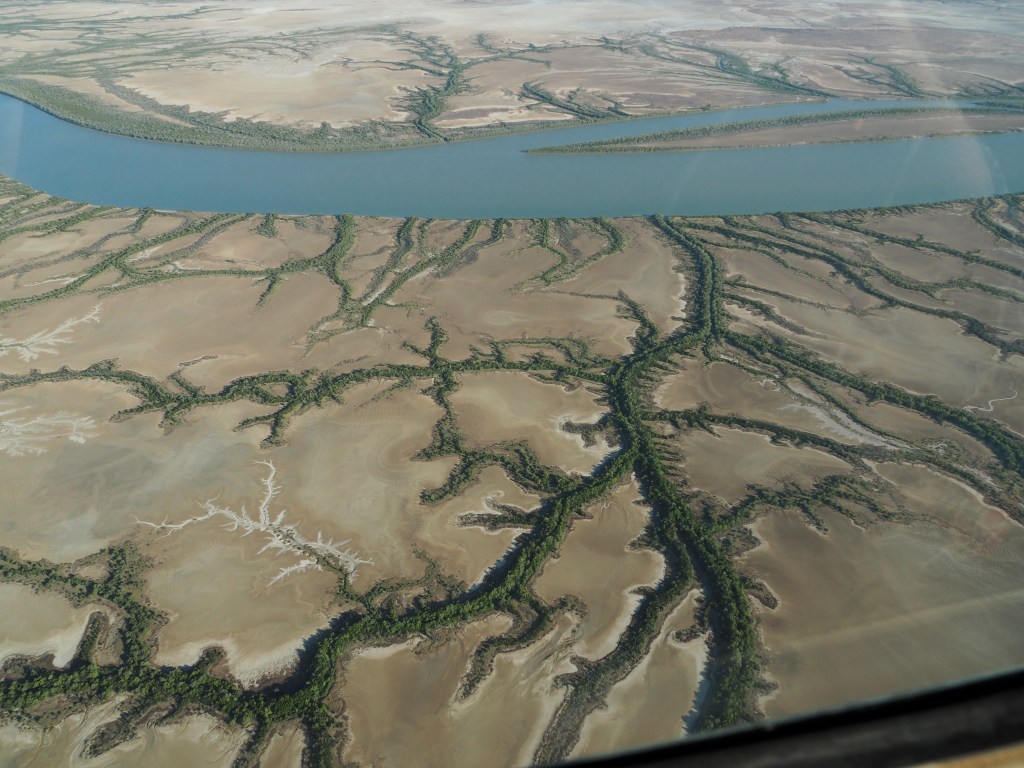
Albert River, and surrounding saltpans, near Burketown, 2021. © Trisha Fielding
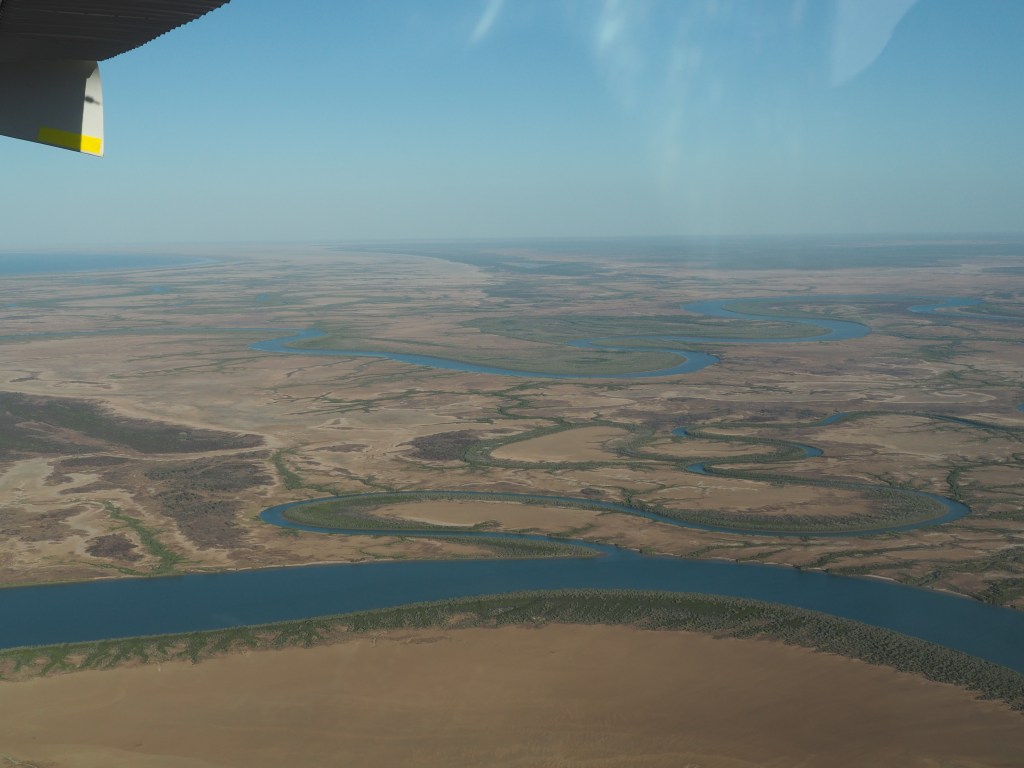
Albert River, near Burketown, 2021. © Trisha Fielding
Aerial view of the Gulf Country, near Burketown, 2021. © Trisha Fielding
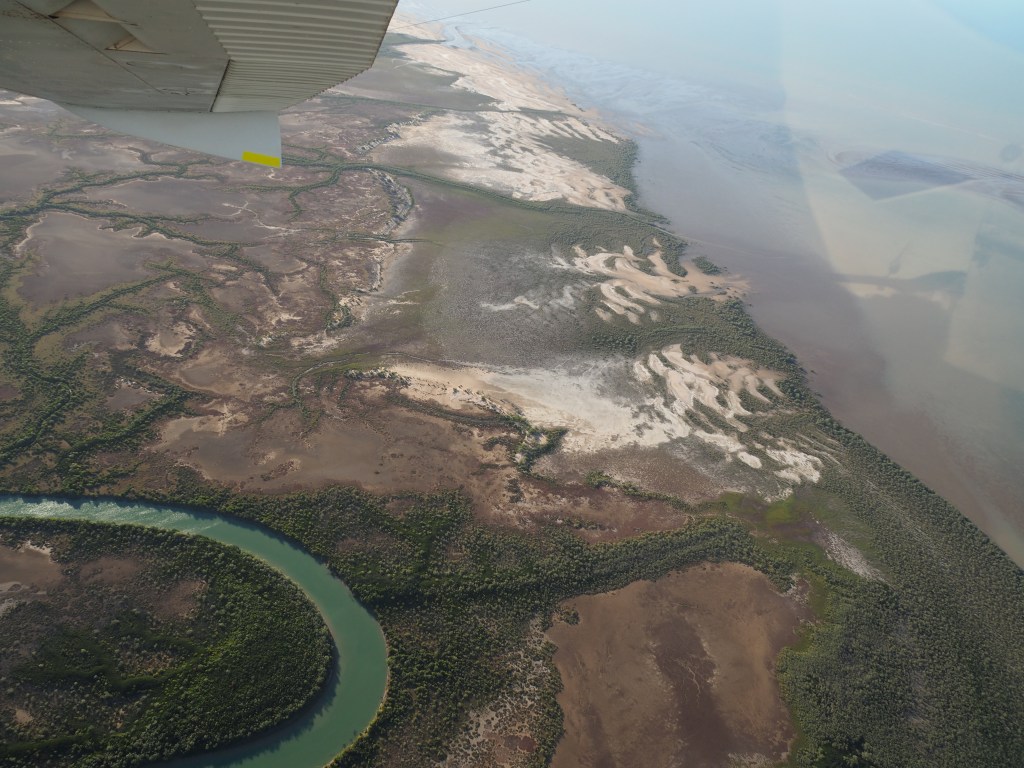
Aerial view of the mouth of the Albert River, 2021. © Trisha Fielding
Aerial view of the Gulf Country, near Burketown, 2021. © Trisha Fielding
Where the land meets the sea. © Trisha Fielding

References:

  1. Woinarski, J. et. al. The nature of Northern Australia: it’s natural values, ecological processes and future prospects, ANU Press, Canberra, 2007, p. 85 ↩︎
  2. In 1841, Captain J. Lort Stokes of the Beagle, named these flat, grassy plains for their potential as rich pasturelands. ↩︎
  3. Woinarski, J. et. al. The nature of Northern Australia, p. 56 ↩︎

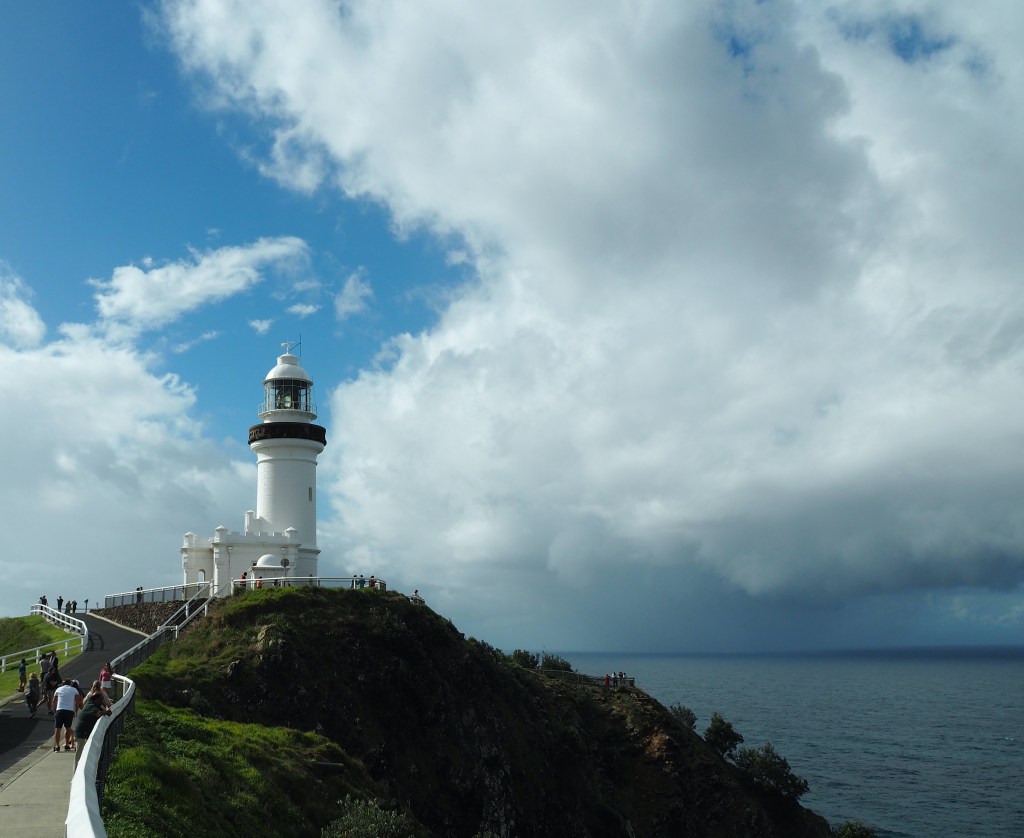
Cape Byron Lighthouse

I love lighthouses, though I’m not entirely sure what it is about them that so fascinates me. Perhaps I see them as a symbol of resilience? They’re built to withstand everything that Mother Nature can throw at them. They’re solid, enduring, perpetual; in a world where constant change is inevitable.

Cape Byron Lighthouse, 2023. Photo: Trisha Fielding

Perhaps another reason I love lighthouses is that getting to them can involve a bit of adventure. They’re often situated high up on some isolated, rugged stretch of coastline, where bracing winds whip sharply about your face and threaten to blow you off your feet!

I can think of no other edifice constructed by man as altruistic as a lighthouse. They were built only to serve.

George Bernard Shaw

I saw my first lighthouse when I was 20 years old, at Table Cape, near Wynyard in Tasmania. Overlooking Bass Strait, Table Cape Lighthouse is 25 metres tall and sits at an elevation of 180 metres above sea-level. It’s flanked by a picturesque patchwork of sprawling agricultural farmlands. I thought it was fantastic. Since then, we’ve visited many lighthouses, including those at Cape Cleveland, Fitzroy Island and Low Island (all in Queensland). These last three each involved boat rides, or hikes (or both) to get to them, and they were all totally worth the effort.

Table Cape Lighthouse, Tasmania, 1991. (That’s me in the foreground!) Photo: Murray Fielding.

Cape Byron Headland – walk and lighthouse

Recently, I added another lighthouse to my list when my husband and I did the Cape Byron Headland walk. This walk, which takes in some truly stunning coastline, was the sole reason for our visit to Byron Bay. It is said to be the most visited lighthouse in Australia and attracts half a million visitors every year.

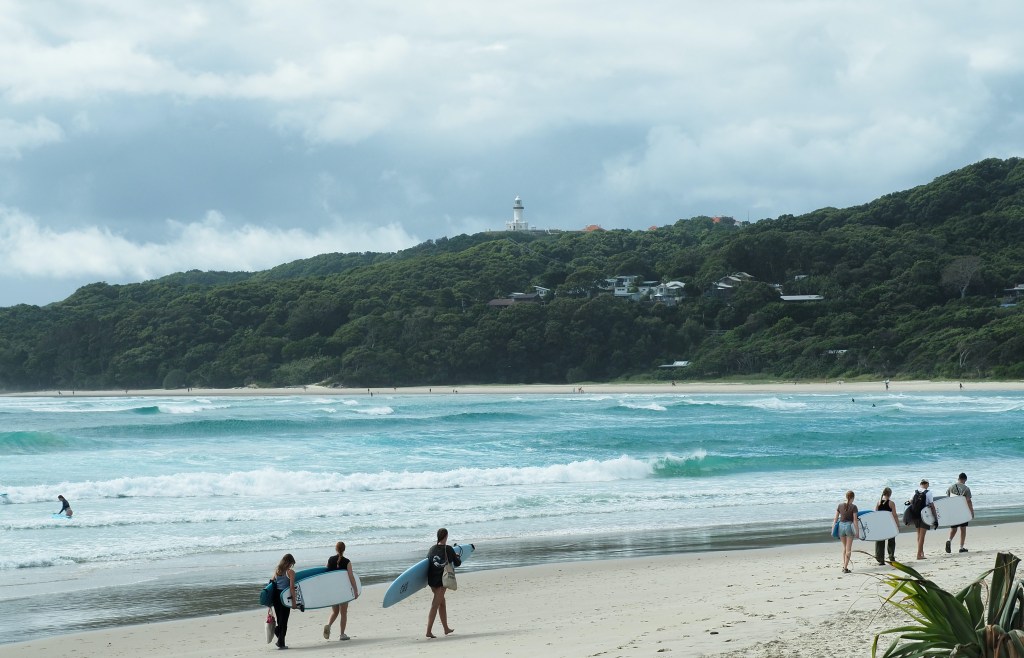
Main Beach, Byron Bay, 2023. Photo: Trisha Fielding

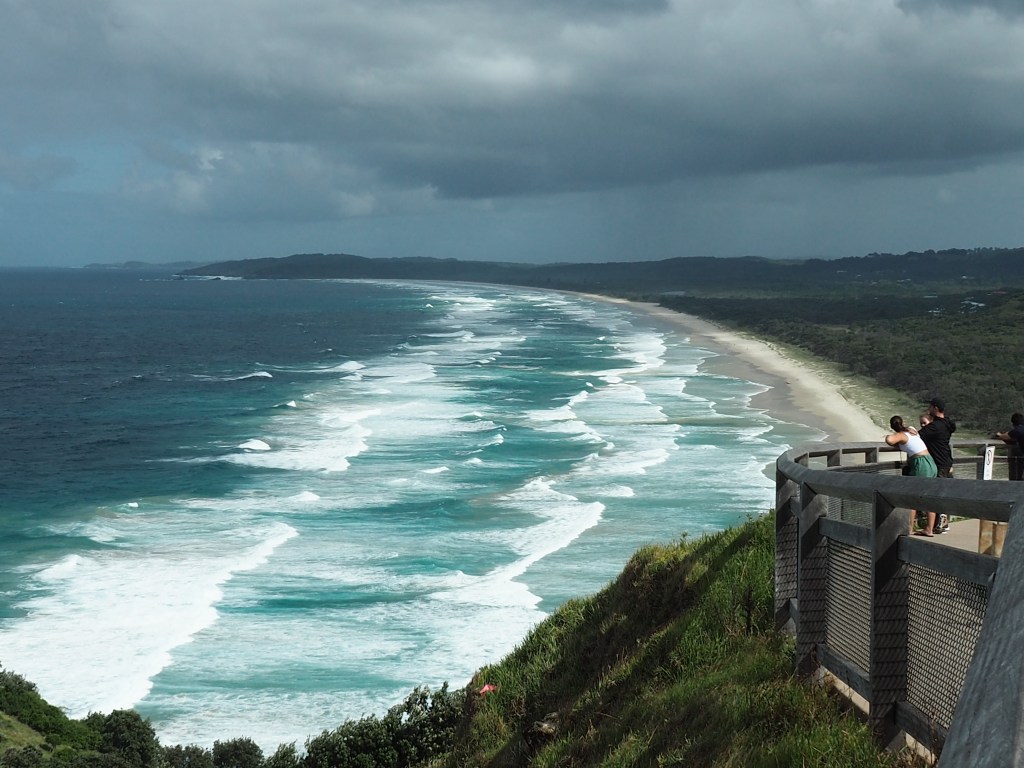
We started our walk near the Captain Cook lookout/picnic area. The first section of the walk begins with an elevated timber boardwalk that hugs the headland and soon opens up to an expansive view out over Clarkes Beach and Main Beach. Rather disappointingly, it was very overcast when we set out, so not the best weather for photographs, but we stopped there for a few snaps anyway before moving on.

After about 600 or so metres, you emerge onto a surf beach called The Pass. This is an excellent vantage point to watch surfers riding the waves. They seem to start off just out of sight around the headland, catch the break then ride the waves into the bay and into sight of spectators on the beach. It’s really quite something to see. They seem to appear rather miraculously, as if out of nowhere. 

Surfers at The Pass, Byron Bay, 2023. Photo: Trisha Fielding

We had been hoping the weather would clear but while we were watching the surfers it started to rain. Just drizzle at first. We had packed some lightweight rain ponchos in our backpacks, but neither of us particularly wanted to have to put them on. No one else around us seemed to be bothered by the rain. Then it started to get a bit heavier. It wasn’t exactly a downpour, but it was enough to soak you if you were in it for long enough, and we had camera gear with us, so we decided, sensibly, to put the raincoats on. So off we went, two sensible nerds wearing what appeared to be blue plastic bags, looking very out of place amongst the bronzed, but slightly shivering beachgoers.

From here, the track takes in a short section of bushland called Palm Valley and then the walk begins to climb in earnest. All the walking tracks on the Lighthouse walk are either paved or stepped in some way and are very well maintained. A good portion of the track is quite steep, but there are plenty of places to stop for a breather and take in the stunning views. One of the highlights for me was seeing so many beautiful Coast Banksias, clinging stubbornly to the cliffs.

Coast Banksia, Byron Bay, 2023. Photo: Trisha Fielding

After about 500 metres, the next beach is Wategos Beach. There are covered picnic shelters here with BBQ facilities and given finer weather, it would have been a beautiful spot for a swim. The steps at the end of the beach are where you start to really climb. Part way up we came across a young woman who was perched rather precariously on a narrow sliver of ground on the outside (seaward side) of the guard rail. She had a camera, and I often stop to chat with people who have proper cameras (as opposed to just taking photos on a mobile phone). I asked her if she had “got any good shots?” She replied that she was filming her partner who was “foiling”. That’s surfing, but with a hydrofoil attached to the surfboard, rather than a fin. I guess you learn something new every day.

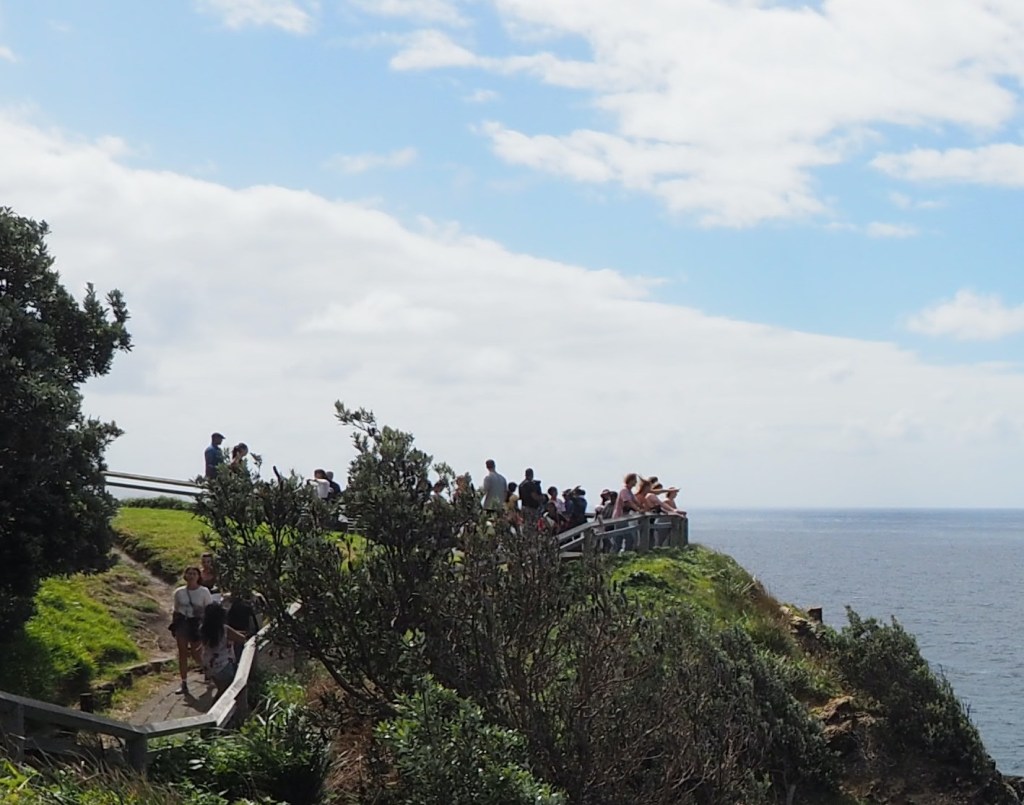
The next beach is Little Wategos, and there’s a great lookout here with panoramic views from a windswept headland. Once you climb back up the staircases from here, it’s onwards and upwards to the lighthouse. There are a lot more stairs to negotiate, but after a few hundred metres, you’ll arrive at the easternmost point on the Australian mainland. The day we did this walk was a public holiday, so the walking track was busy. At this lookout there were lots of people milling about, waiting to take selfies in front of the landmark sign. We decided to stop here for a drink break and wait for the crowds to die down. This didn’t happen, and after about half an hour of politely waiting for the same group to move on, we just snapped a few quick shots and went on our way. 

Cape Byron Headland, 2023. Photo: Trisha Fielding

From here, the last few hundred metres of the climb up to the lighthouse felt like a bit of a chore. It’s quite steep, and my calf muscles were burning by the time we reached the Lighthouse. But by this time, the sun had come out, so I was looking forward to getting some decent photographs!  

Cape Byron Lighthouse, 2023. Photo: Trisha Fielding

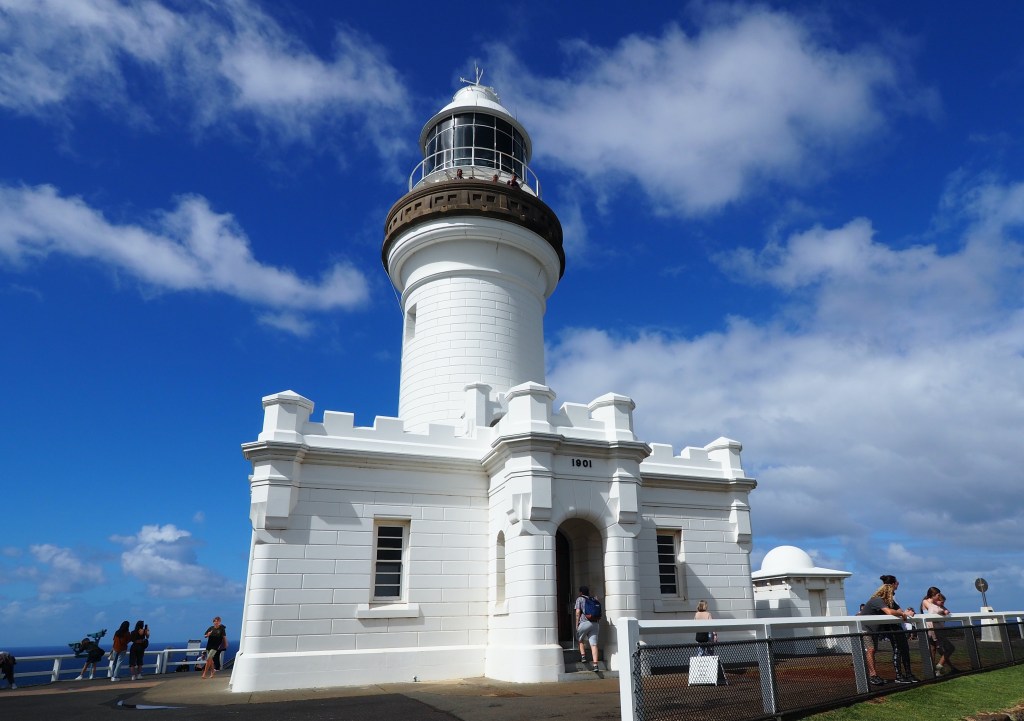
Cape Byron Lighthouse

Completed in 1901, the Cape Byron light is visible from 40km away – and is the brightest on the Australian coastline. Built of pre-cast concrete blocks, the lighthouse is 22 metres high, and sits at an elevation of 118 metres above sea level. The lighthouse was operated by lightkeepers until 1989, but since then the light has been automated. If you’re interested in the design of this lighthouse, the National Archives of Australia hold architectural plans for the Cape Byron Lighthouse. They also hold a Visitor’s Book from the lighthouse. The one covering the years 1902-1924 has been fully digitised (all 614 pages of it!)

Tallow Beach, Byron Bay, 2023. Photo: Trisha Fielding

The walk back down takes you along another headland with sweeping views of Tallow Beach, before heading off into bushland. More upward tracks. Then some downward tracks. Then upwards again. Then just when you think it might be all downhill from there, the track climbs again, though nothing as steep as the last few hundred metres to the lighthouse had been. It’s about 1.4 km from the lighthouse and down the Tallow Ridge Track, and many people just take the bitumen road back down from the lighthouse; but the walk through the coastal forest here is a much nicer way to finish off the walk. 

A downhill section on the Tallow Ridge Track, Byron Bay, 2023. Photo: Trisha Fielding

Most tourist guides/info estimate that the Cape Byron Headland walk will take about 2 hours, but we took about 2.5 hours. It depends on your fitness level. The NSW National Parks and Wildlife website classify it as Grade 3 track, which is technically moderate, and suitable for most ages and fitness levels. All up, the entire outing took us about 4 hours. But that included a 30-minute stop at the easternmost point lookout as well as about an hour break for lunch at the café near the lighthouse. Not to mention quite a few stops to take photographs. Over the four hours I clocked up 9,920 steps on my Fitbit.

It turns out we were lucky to have been able to do this walk on the day we did, because the very next day, the walking track was to be closed for several months, for maintenance. Apart from the stunning coastline and the beautiful lighthouse, we also saw pods of dolphins (far down below us in the ocean) and we saw a species of tiny butterfly that we hadn’t seen before! 

A Hairy Line-Blue butterfly [Erysichton lineatus], Byron Bay Lightstation, 2023. Photo: Trisha Fielding

Oh, and in case you don’t feel like walking, you can drive up to the lighthouse complex. There is a very small carpark up there, and it costs $8 for a maximum stay of one hour. 

The Thrill of the Chase

Chasing after butterflies is a notoriously addictive pastime. It starts out as a passing curiosity but swiftly becomes an obsession. I may as well own it. I am a butterfly obsessive. I spend most of my days seeking out a butterfly high. I look for them everywhere… at home in the garden, or at work in my lunch break, or on bush walks (or street walks), in botanic gardens and parks, in and around creeks, in scrubby vegetation by the beach, on bare or stony patches of ground, on flowers, on weeds, or in the grass… you get the picture. But I have come to understand that what I am really doing is seeking awe and wonder.
It’s difficult to explain the frisson of pure delight I experience when I see a butterfly flit past me. Perhaps it’s like being a child again and experiencing things with fresh eyes and a curious mind? To marvel at a butterfly’s vivid colours, their flight patterns – sometimes lilting, sometimes erratic – and to think upon the sheer unlikeliness of their existence, are all wondrous things.

Pursue whatever fascinates you and brings you to life.

Elizabeth Gilbert

This enthusiastic pursuit of butterflies began about two years ago, which was around the same time my husband and I became “empty nesters”. After 25 years of exhausting busy-ness – raising a family, working, studying, writing – I suddenly found I had a lot of “free” time on my hands. I needed to find something that would take up my time and keep my brain occupied. I needed to learn something new. I took up photography – again. I had really loved photography when I was in my teens, so I decided to buy a camera and start learning how to use one all over again. I soon got busy photographing architecture, landscapes, flowers and plants.

A female Varied Eggfly (Hypolimnas bolina). Photo: Trisha Fielding, 2021.

One day, when I was in the garden photographing some flowers, a big butterfly whizzed past me and landed on a chive flower-head. I know you’re not supposed to allow herbs to flower or run to seed but the bees and the butterflies seem to love them, so why not? This particular butterfly had parked itself quite close to me. And it didn’t seem to mind me being there. It sat there slowly opening and closing its wings a few times before deciding it was safe to bask in the sun with wings wide open. It was brown and orange and white, with a small pale blue patch near the top of each forewing. I was transfixed. It was some months later that I bothered to try and find out what sort of butterfly it was. Turns out, it was a female Hypolimnas bolina. Common name: Varied Eggfly. After that, things just seemed to snowball. I saw more and more butterflies. I took more and more photos. I grew more and more curious.

One of the Skipper butterflies. Photo: Trisha Fielding, 2023.

Since I’ve started photographing butterflies (and posting the pics to Instagram) I’ve had more than one person say to me: “you know, there aren’t many butterflies around any more, not like there were when we were kids”. But here’s the thing… if you no longer see any butterflies around, it’s because you’re not really looking. They are, most definitely, everywhere. Well, in North Queensland they’re everywhere at least. They’re out there zipping past and looking fabulous while quietly going about their business. And their business is important. Butterflies are pollinators. We NEED them.

Just to be clear, I have no desire to physically capture butterflies. Only to observe and to photograph them. I do admit that I follow them around until I can get a good photo (which may well be annoying for them) but I think, on balance, that I am really the only one in real danger in this equation. And that’s because I frequently step into some hole in the ground – disappearing up to my shin; or come perilously close to toppling off the edge of some high embankment; or find that I am standing on top of a nest of angry bull-ants – all because I am totally lost in the excitement of trying to get a photo of a butterfly. Along the way, my husband has managed to catch “butterfly fever” too, and is now my spotter, official photography assistant and bushwalking companion.

In Search of a Blue Argus

Back in December, it occurred to me that even though I had photographed close to 60 species of butterflies (Australia has more than 400), I had not yet seen a Blue Argus [Junonia orithya]. It is supposed to be a common (and widespread) species but I had not yet stumbled across one. It seemed to me that this was something that urgently needed rectifying. But where, exactly, should I start looking? After a bit of searching on the internet, I realised that I should be looking in dry, open bushland. So I looked during my lunch breaks on the bush university campus I work at – despite the searing December heat – but always with no luck. And just before Christmas we drove up to the Ross River Dam to look around there. Lots of Tawny Costers, and a bunch of creepy-looking empty Cicada shells stuck to big tree trunks, but no Blue Argus.

Castle Hill, Townsville, as seen from the end of Pallarenda. Photo: Trisha Fielding, 2023.

Then, one Saturday in late February, after weeks of rainy weather, the clouds seemed to clear and the temperature was not too bad – well, it was tolerable at least. After breakfast, we drove out to Pallarenda for a walk around the headland to Shelly Cove. We had tossed around the idea of driving up to Paradise Lagoon to potentially do a scout around for Blue Argus butterflies, but the weather forecast predicted light clouds from around mid-morning. This would not be conducive to seeing butterflies on the wing, so we settled on a bushwalk to Shelly Cove.

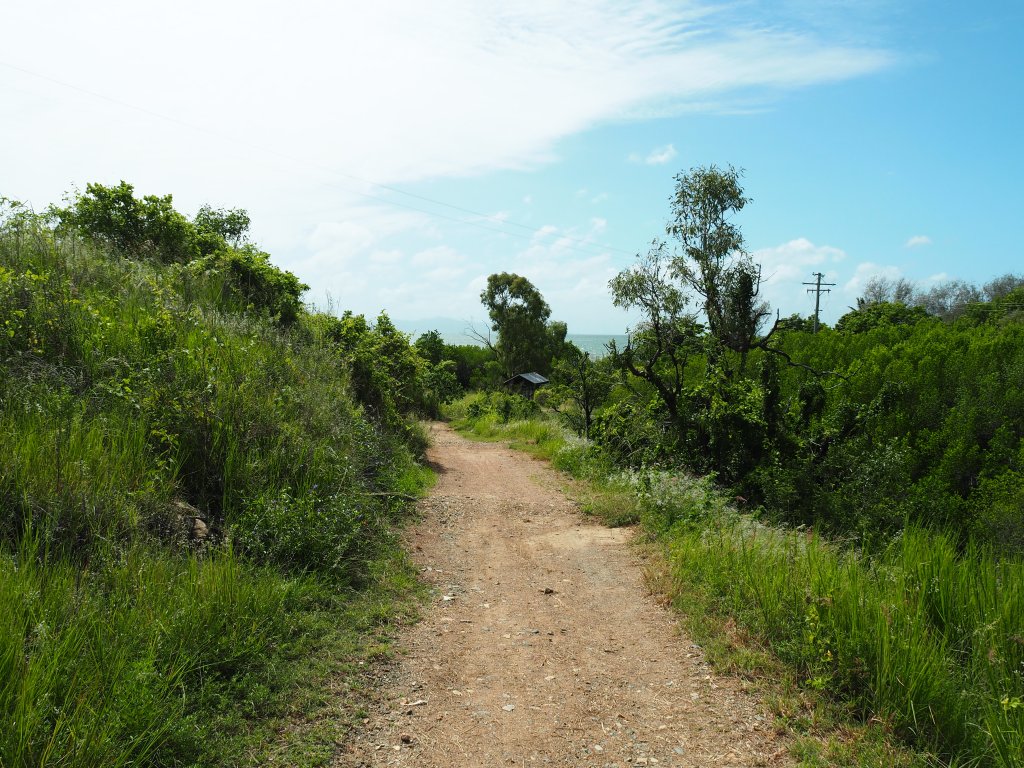
The start of the sandy track around to Shelly Cove. Photo: Trisha Fielding, 2023.

We parked at the end of the old Quarantine Station, grabbed our hats and water bottles, and lathered up with insect repellent. We walked across a short footbridge that spanned a small tidal stream that was thick with mangroves. On the other side of this bridge, a sandy track split in to two. We decided to take the trail that branched off to the left of us. We had no sooner turned our heads towards the track when we both saw something small and black and possibly with a hint of blue flitting around in front of us. Could this be a Blue Argus?

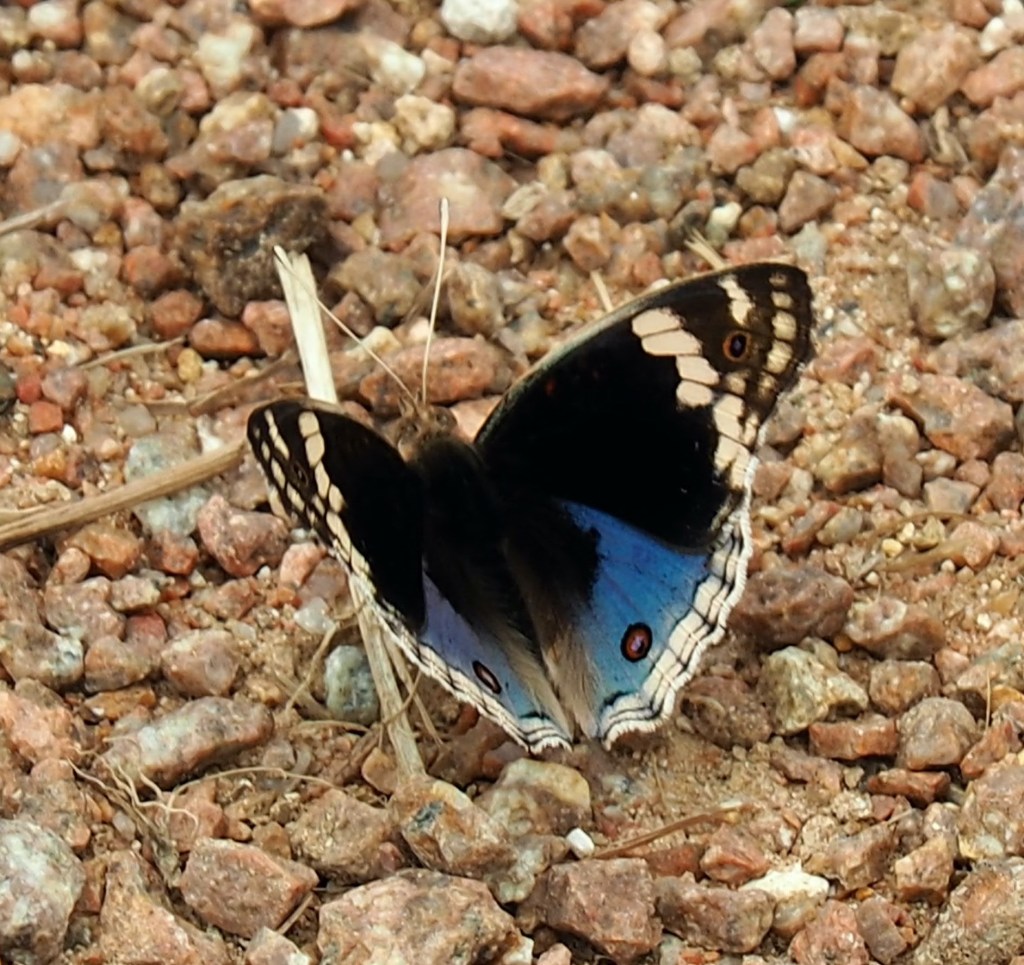
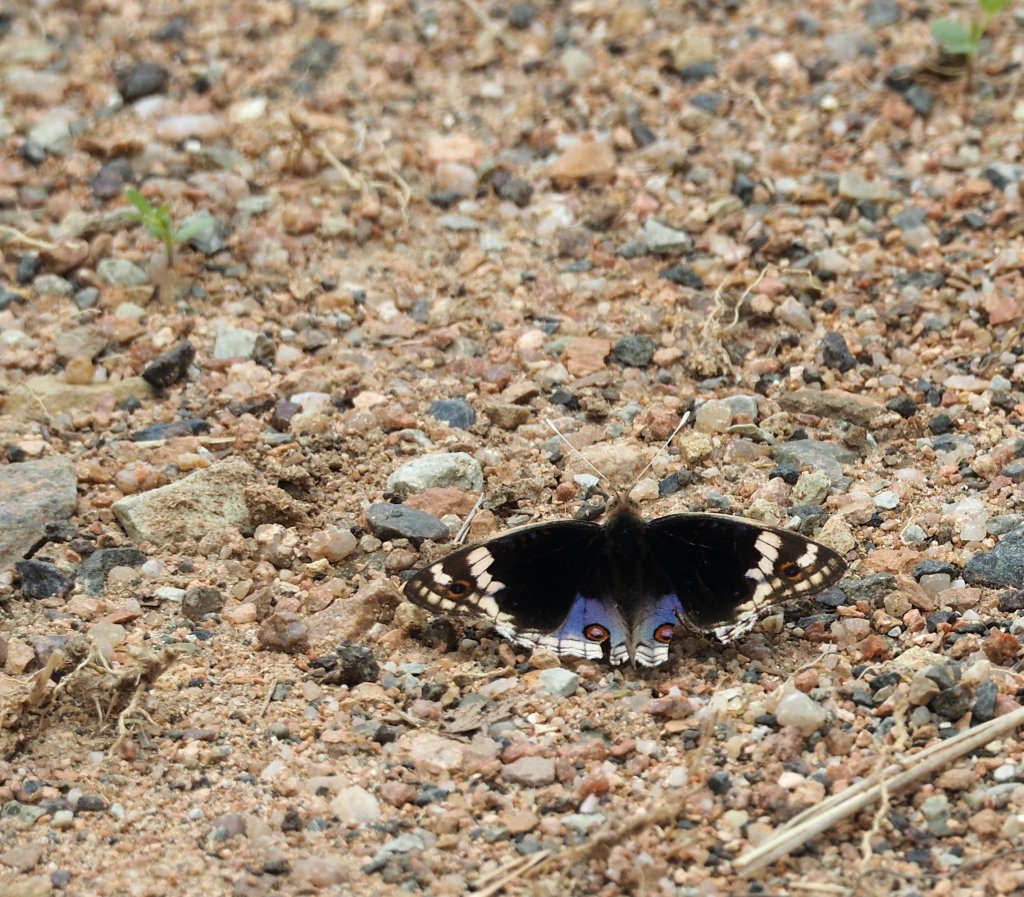
Underside wings of the Blue Argus. Photo: Trisha Fielding, 2023.

It was fairly small. Was this it? We watched in dismay as it quickly flew away into the scrub somewhere on the side of the embankment. But then we realised it was sitting on the tiny rocks in the middle of the track. I started snapping away with my camera, but it was hard to see. With its wings snapped shut, the underside colours blended seamlessly with the sand and pebbly rocks on the track. I moved a tiny bit closer. It opened its wings ever so slightly. I saw black and white on the forewings. And then, the tiniest little smidge of blue was evident on the lower wings. Then it opened its wings a little wider, to bask in the sun, revealing the azure blue on his upperside hindwings. This was him – a Blue Argus! At last!

A male Blue Argus (Junonia orithya). Photo: Trisha Fielding, 2023.

This one was a male. And a near-perfect specimen. The eye spots at the base of the upper hindwing were small-ish. It’s these eye spots that the butterfly gets its common name from – Argus (or Argos) Panoptes: a many-eyed giant in Greek mythology. The female Blue Argus has larger eye spots on the hindwings and is a slightly larger butterfly overall, which is quite obvious in the field – if you get to see one. Which we did! On our return an hour later down the same pebbly track. This specimen was a little damaged – one hindwing in particular had a fairly large chunk missing, though this took nothing away from her beauty, I can assure you. She was gorgeous. Dark, velvety-black upper wings, with white/cream-coloured markings and orange-ringed eye spots. I had finally found (and photographed) the Blue Argus. An excellent day out, in my book.

A female Blue Argus. Photo: Trisha Fielding, 2023.

If you’ve read this far, you’re probably thinking: this woman has far too much time on her hands. And you’d probably be right. But when I’m out walking and looking for butterflies, I’m getting some exercise. And when I’m sitting and waiting and hoping for a particular butterfly to appear in some shady, tree-filled glade somewhere, I’m communing with nature… actively observing what’s going on around me – engaging my senses, being small and quiet and blending into the landscape. It’s good for the soul. And something wondrous has been awakened inside of me.

I was born a naturalist, though all these years for want of anything to excite it, it had lain dormant within me.

Margaret Fountaine – butterfly collector and world traveller