Tableland Travels

What could be more fun than a bush walk through rainforest on a track that features an abandoned railway bridge, a freshwater swimming hole, a suspension bridge, and the chance to spot a Platypus? The Peterson Creek walking track at Yungaburra has all of these things. There’s also abundant bird life and butterflies too!

Abandoned railway bridge over Peterson Creek, Yungaburra, North Queensland.
Photo: ©Trisha Fielding, 2022.

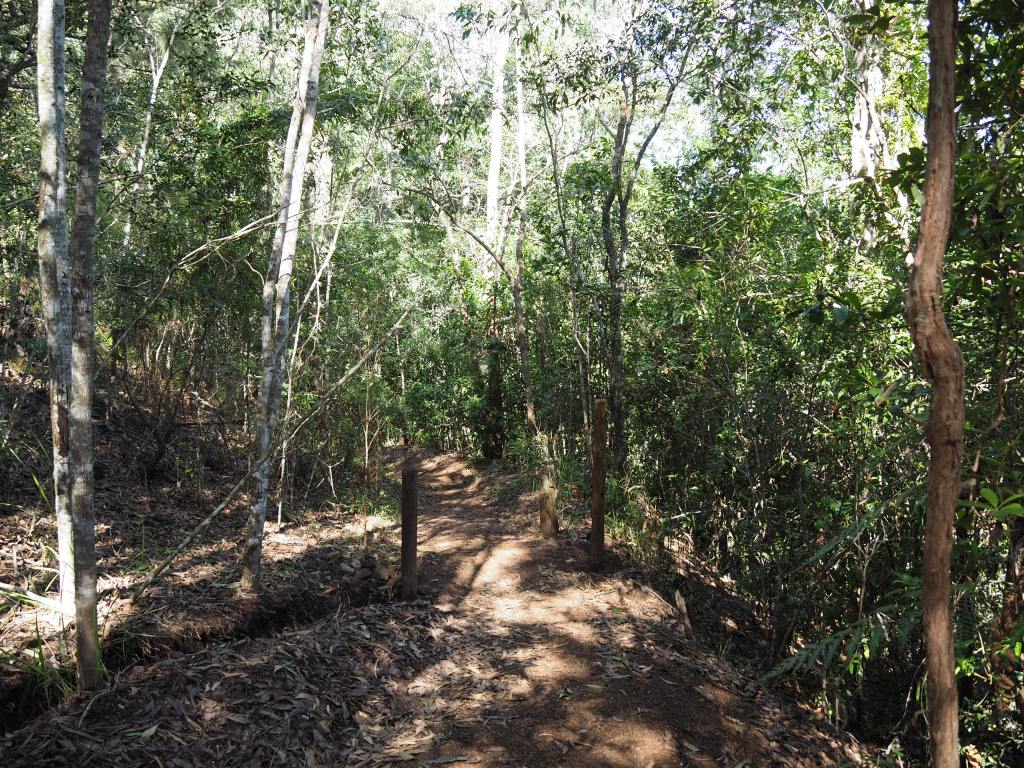
The Peterson Creek track takes about 1-2 hours and is considered a Grade 2 walk, meaning no bushwalking experience is required, though there are some steep sections (and, let’s face it, not everyone is going to like the suspension bridge). We chose to start the circuit at the roundabout in front of St Patrick’s Church. After a short walk along Mulgrave Road, we turned left onto a grassy corridor – where the railway line once ran.
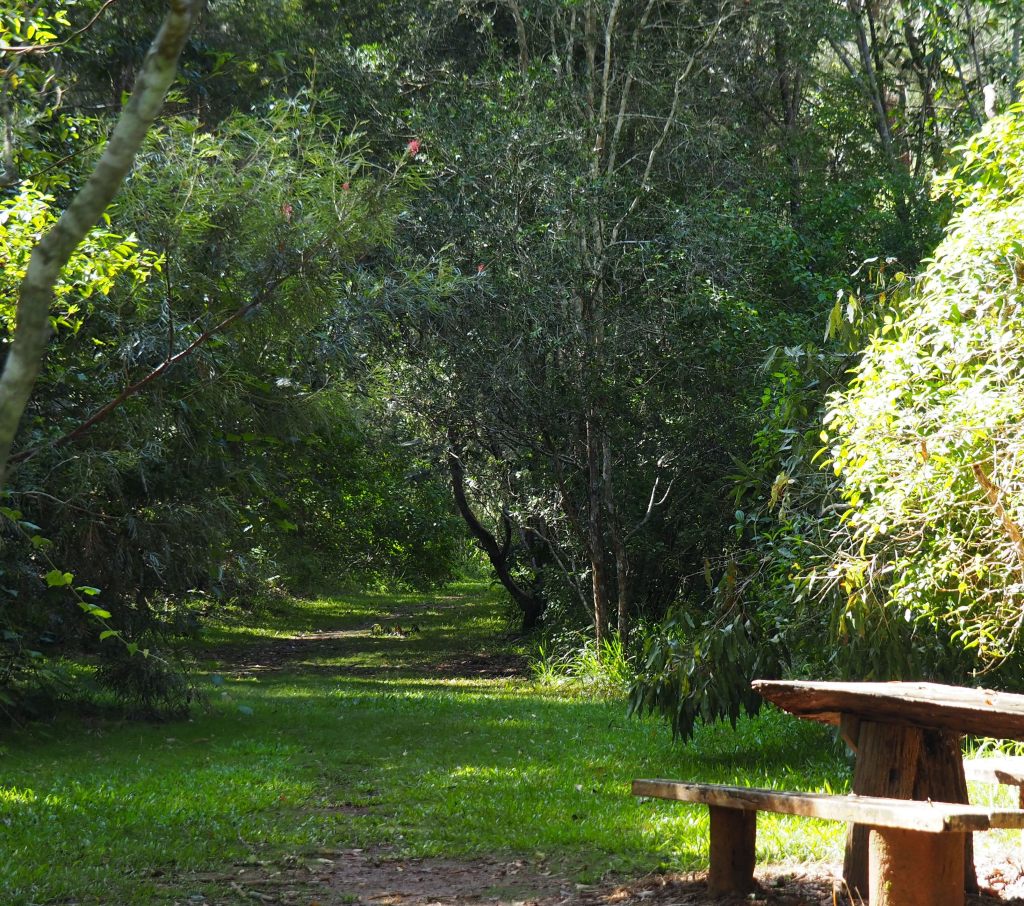
The shaded railway cutting that leads to the abandoned steel bridge over Peterson Creek.
Photo: ©Trisha Fielding, 2022.

The Tolga to Atherton section of the Cairns to Ravenshoe railway line was opened in 1903 and a branch line from Tolga to Yungaburra opened in 1910. The rail bridge over Peterson Creek was completed in 1958 when part of the branch line was rerouted to make way for the Tinaroo Dam. In fact, three steel bridges were constructed for this line across Peterson Creek, Barron River and Mazlin Creek. The bridge over Peterson Creek spans 78 metres; its steel girders sit 28 metres above the creek bed, supported by concrete piers. Its use was very short-lived, as the line closed in 1964.
The track then begins to climb slightly, and follows the path of the creek along an elevated ridge. After negotiating a steep pinch down stone steps and crossing a footbridge over a ravine, we were rewarded with a surprising vista when the bush track opened on to a sunny little glade next to a swimming hole. Frawley’s Pool was named after a local schoolteacher named Mick Frawley, who reportedly taught many children how to swim there. A shady little stream running beside the grassed picnic area completed the delightful scene.
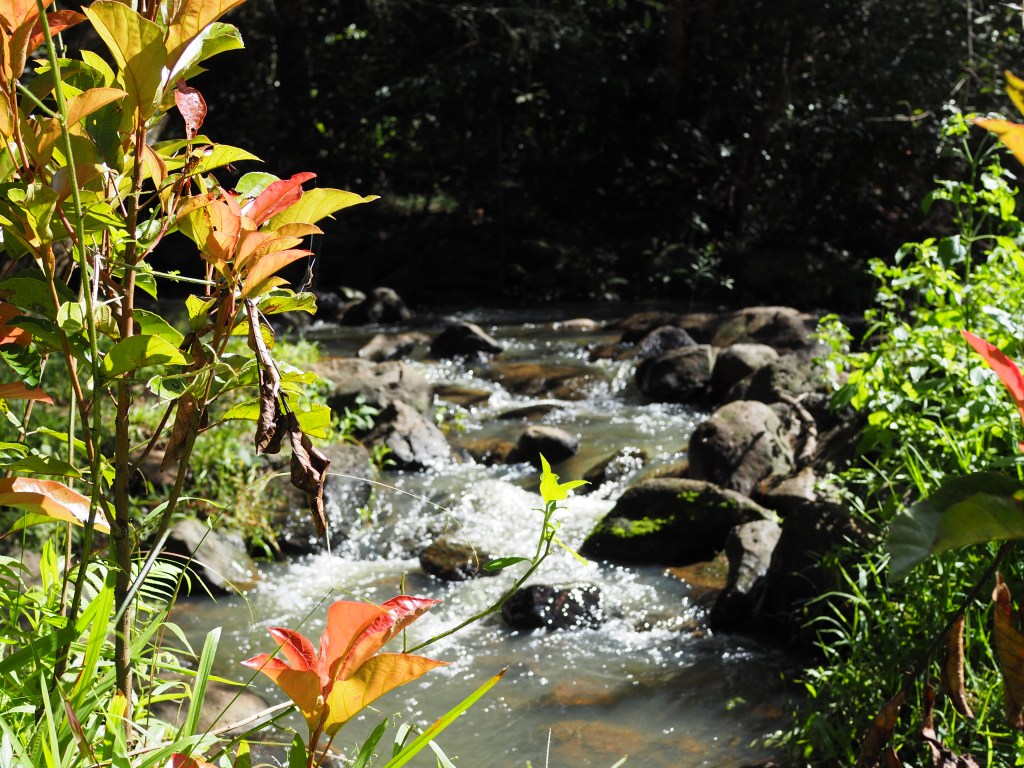
A stream running into Frawley’s Pool, Peterson Creek, Yungaburra.
Photo: ©Trisha Fielding 2022.

Further along, a short diversion down a sidetrack takes you to Williams Weir, and the site of a water wheel turbine, which used to supply power to the village of Yungaburra. A point of interest for lovers of old machinery, is an old Fitz-Burnham turbine, on the site of an old pump house, which was used to pump water from the creek up to the village.
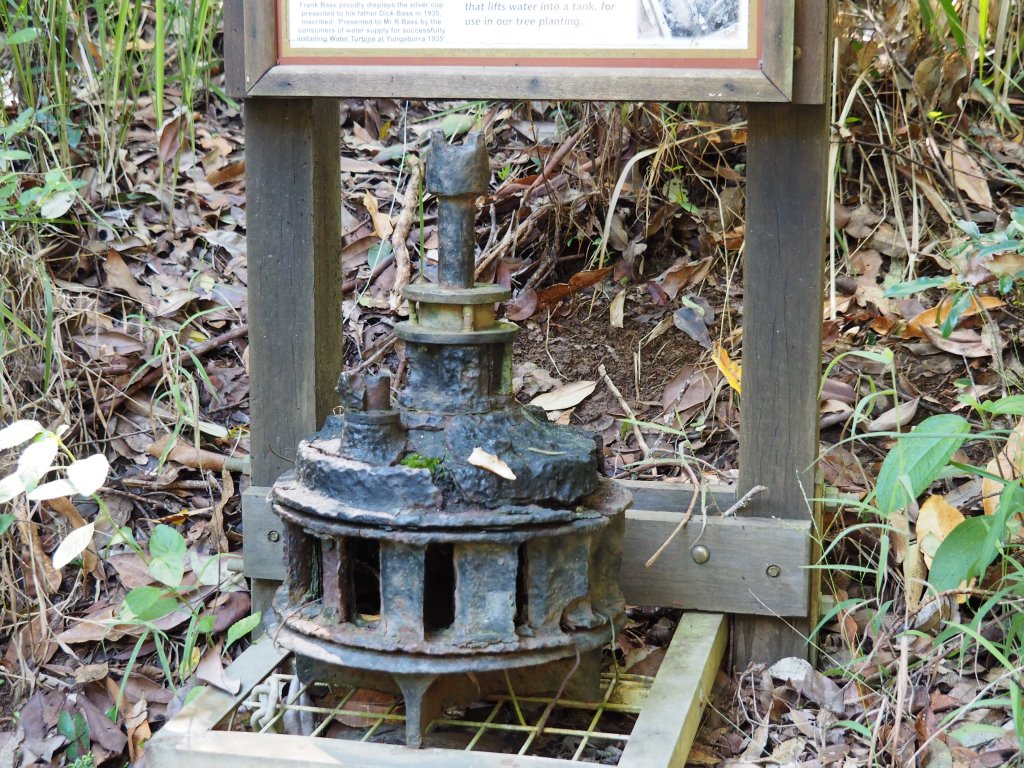
Peterson Creek, Yungaburra. ©Trisha Fielding, 2022.

Perhaps the most fun part of the walk is traversing Lloyd’s Suspension Bridge, which spans 30 metres across Peterson Creek. Planned by Yungaburra Landcare Group, it was engineered by Robert Colefax, designed and built by John Nott and privately funded by Lloyd Abell. A sign warns that no more than 10 people at a time should be on the bridge. I think I prefer one person at a time, as the timber platform sways quite significantly under your feet. Understandably so – it’s a suspension bridge after all. I suspect visiting children love its wobbliness.

Lloyd’s Suspension Bridge over Peterson Creek, Yungaburra. Photo: ©Trisha Fielding 2022.
Lloyd’s Suspension Bridge, Peterson Creek, Yungaburra. Photo: ©Trisha Fielding, 2021.

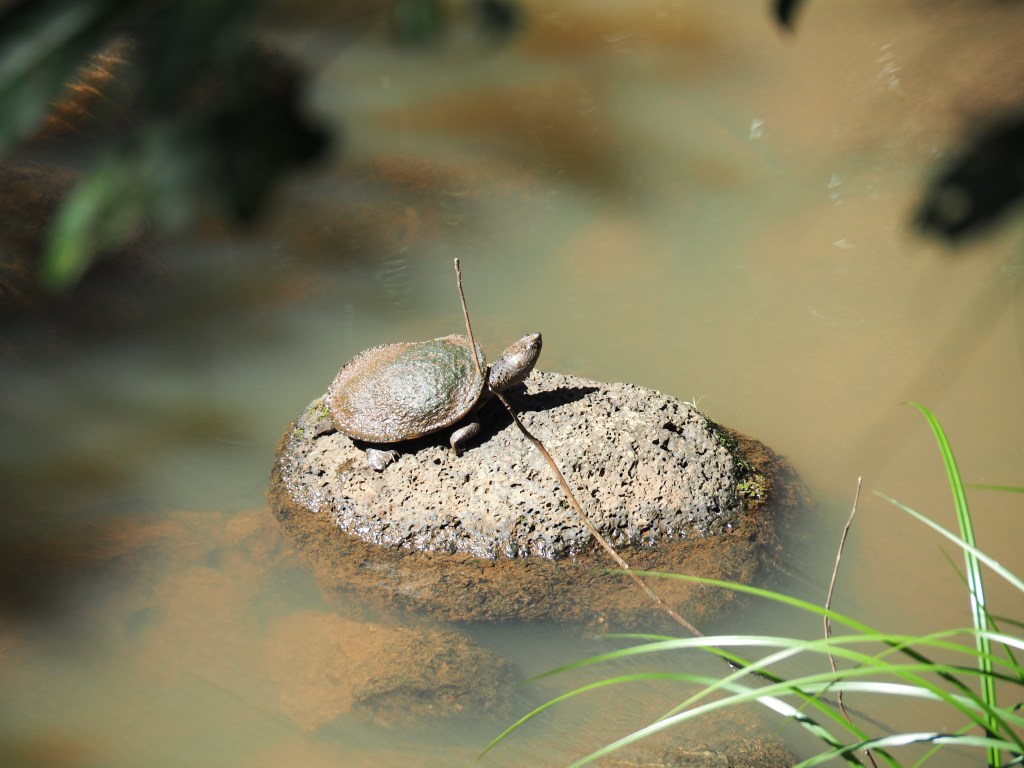
On the other side of the bridge the track hugs the creek line, and its here that you are very likely to spot a Platypus – if you’re quiet, and you stop for long enough. We did see one, but it darted through the murky water so fast, I only got a (very) blurry photo. Plenty of Saw-shelled Turtles were posing for photos though. The trail meanders a little further on, skirting the boundary fence of adjoining farmland, then you walk underneath the road bridge (on the Gillies Highway) and then up to the Platypus Viewing Platform, which is basically the end of the track. We’ve never actually seen a Platypus from this viewing platform, perhaps because there is so much noise from the traffic on the road right beside it.

The Peterson Creek walk is also known as an area where the Lumholtz Tree Kangaroo can be seen, but we lucked out on this occasion. The Yungaburra Landcare Group have spent decades rehabilitating the Peterson Creek area, revegetating endangered forest plants and maintaining the walking track, and the sheer beauty of the place is testament to their efforts.
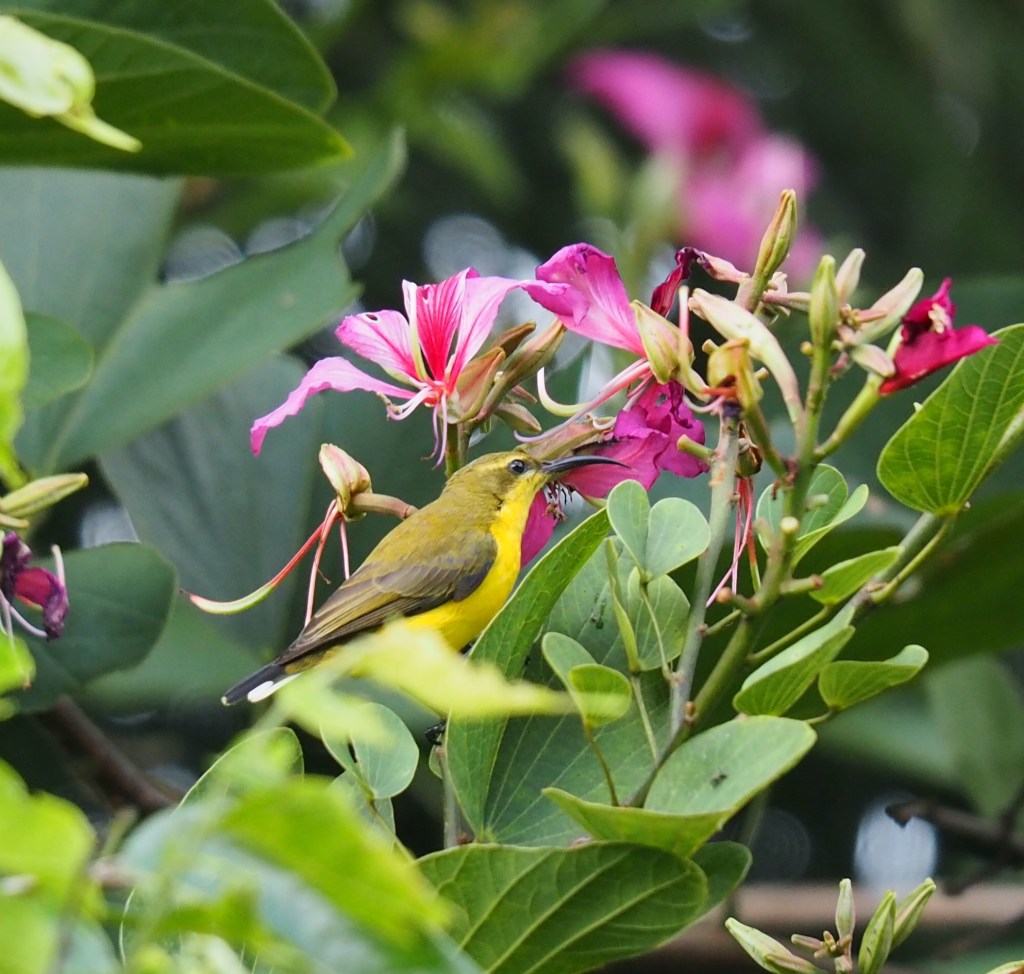
Olive-backed Sunbird, Yungaburra. ©Trisha Fielding, 2022.

Mount Isa – Excursions in the Spinifex

Generally speaking, the first thing that anyone notices about Mount Isa, whether flying in or driving in, is the Mount Isa Mine. It dominates the view from all directions. For almost 100 years, Mount Isa’s vast mineral wealth — its copper, lead, silver and zinc — is what the city has been best known for. But the Mount Isa region (the traditional lands of the Kalkadoon peoples for over 40,000 years) is also rich for another reason — its beautiful, ancient landscape.

Yellow Australian native wildflowers with rust-coloured red rocky outcrop in background, at Mount Isa
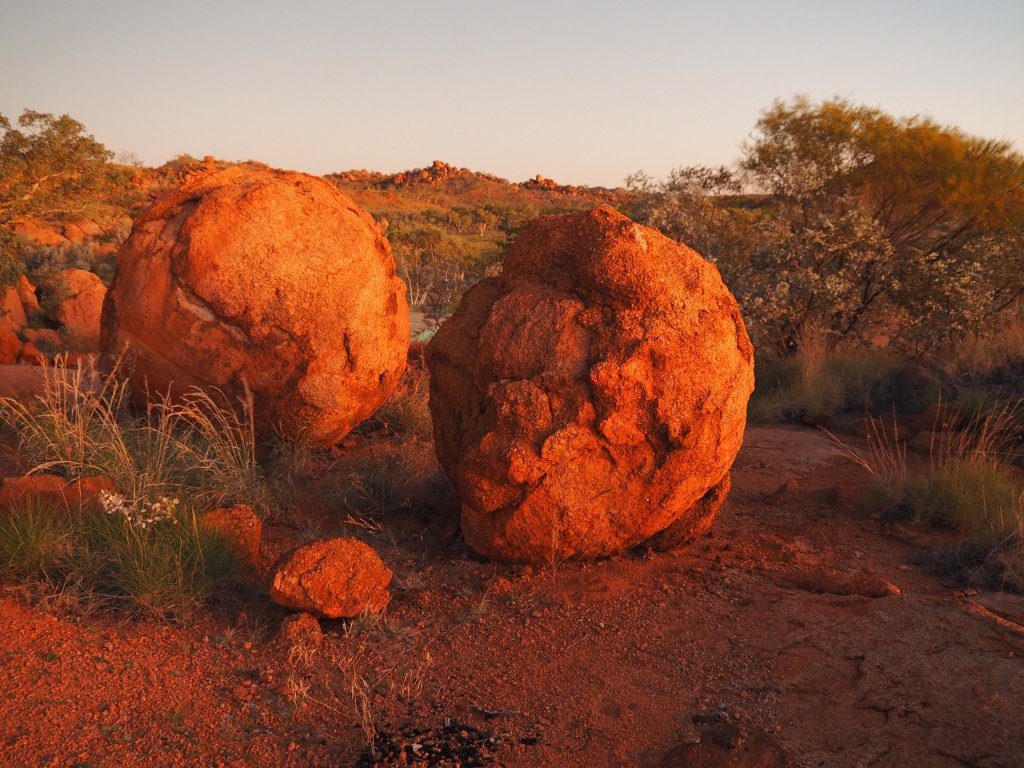
Late afternoon sun bathes spherical rock formations. Sybella granite batholith, Mount Isa.
Photo: © Trisha Fielding 2022.
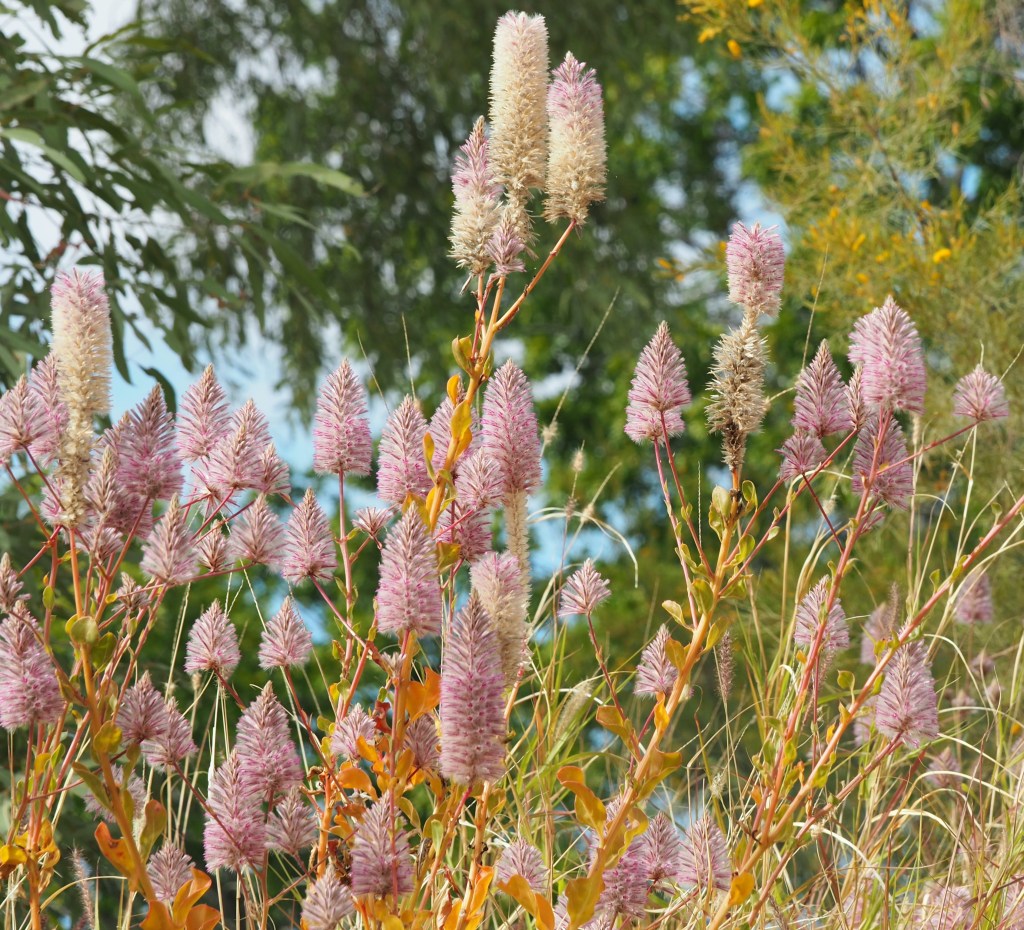
Apart from the mine, which, let’s face it, cannot be unseen — one of the first things I noticed when I landed in Mount Isa for the first time (on a research trip for a history book I’m writing) was a profusion of wildflowers that lined the roadside from the airport to the city. The clumps of Mulla Mulla (Ptilotus exaltatus) — a native of arid and semi-arid areas of Australia — with its conical-shaped, pinkish/mauve-coloured flowers, proved to be a prelude to the natural attractions of the area.

A pink and mauve-coloured flowering Australian native plant, with conical shaped blooms.
Mulla Mulla (Ptilotus exaltatus), is found in abundance in Mount Isa, Queensland.
Photo: © Trisha Fielding 2022.
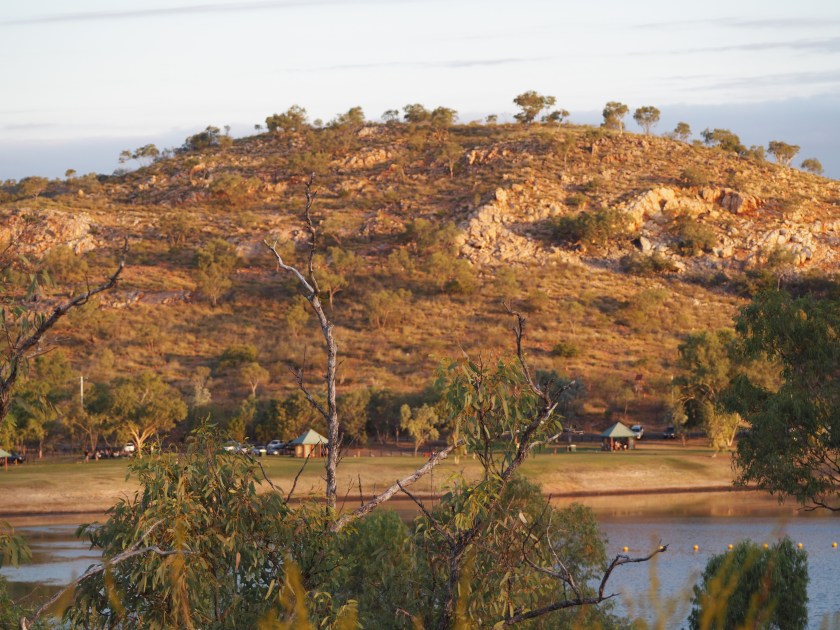
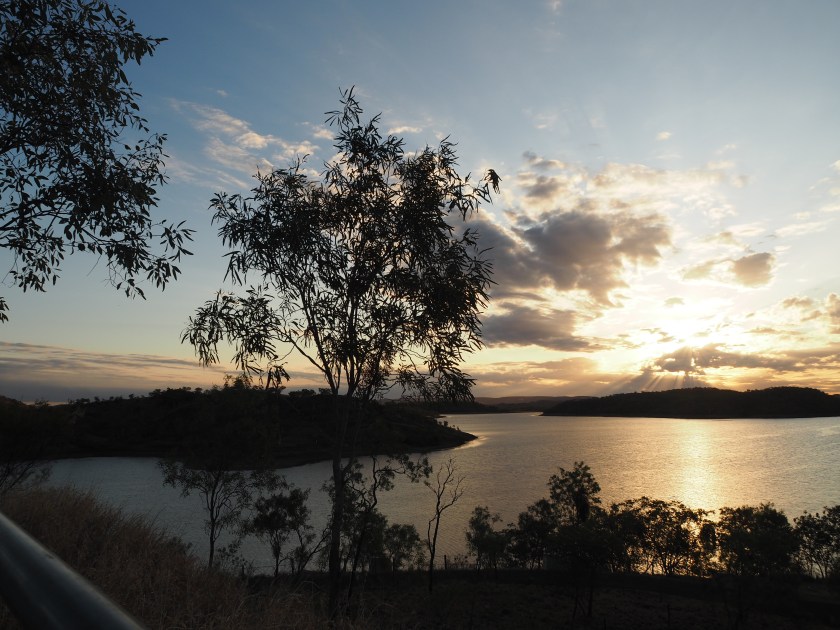
For a start, there is abundant bird life here. One afternoon I drove out to Lake Moondarra, about 17km from Mount Isa, to do some exploring. This lake was created in 1957 when a dam was built on the Leichhardt River to provide the inhabitants of Mount Isa with a reliable water supply. I spent a very pleasant couple of hours out here, wandering around in the scrub out the back of the dam spillway, carefully trying to avoid scratching my legs too much on the spinifex grass. I saw a pair of galahs picking at the rough, rocky ground; a Red-winged parrot; a Cloncurry Ringneck parrot; a few crested pigeons; and several yellow-throated miners.

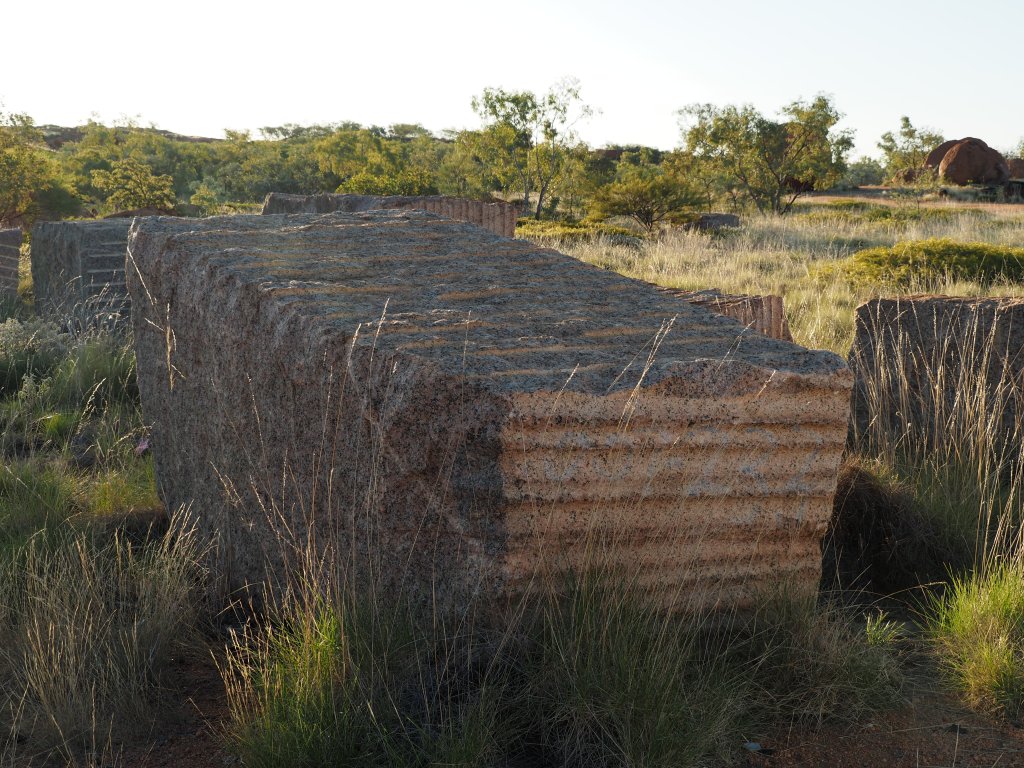
On Sunday afternoon, I was fortunate to have friends (who are locals) drive me out to a place they called “the granites” to watch the sun set. It’s an abandoned granite mine, technically part of the Sybella granite batholith* — and geologically, it’s estimated to be around 1,660 million years old. That’s an impressive timescale. Situated on private property, the site is about 20km outside of Mount Isa, and accessible by 4WD vehicle only. After passing through an unmarked gate, a dirt track soon winds past a field of monolithic lumps of granite, mined but later abandoned, all laying about like some kind of collapsed Stonehenge in outback Queensland.

massive blocks of mined granite lie abandoned in the spinifex, near Mount Isa
Massive blocks of mined granite lie abandoned in the spinifex, near Mount Isa.
Photo: © Trisha Fielding 2022.
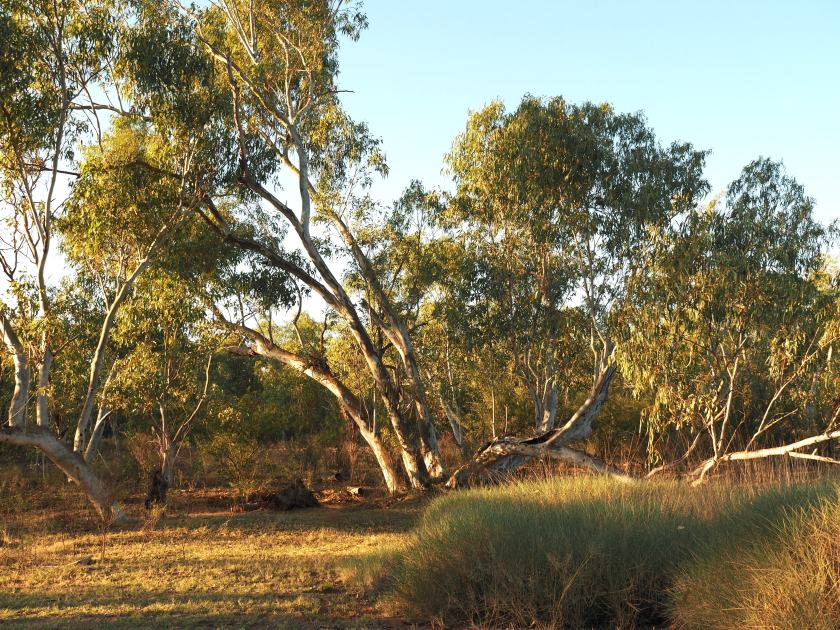
spinifex grass, red rocks, trees, dirt road
Spinifex grass and Silver Box trees, Mount Isa region.
Photo: © Trisha Fielding 2022.
panoramic landscape, western Queensland
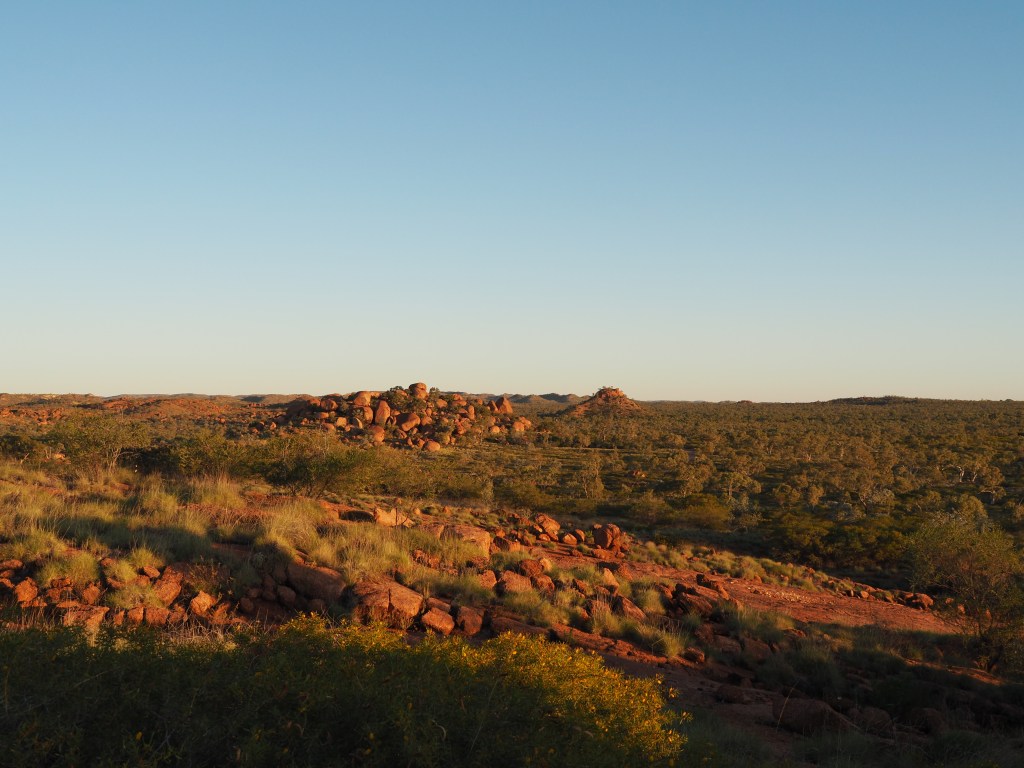
Rocky outcrops, Mount Isa region.
Photo: © Trisha Fielding 2022.
A little farther on, a massive outcrop of pink granite rises up from the track, scattered with rust-coloured spherical boulders, often stacked impossibly precariously on top of each other. Soon, the granite outcrop flattens out, allowing a panoramic view of the entire plain below it. It’s a spectacular scene that stretches far off to the horizon, where the sun drops rapidly behind the ranges. As the last of the light faded, the rocks behind us began to change colours, assuming a luminous, ethereal quality that was spellbinding. It’s an afternoon that I won’t soon forget.

two large rust-coloured spherical rocks in an outback landscape
Granite spheres, Sybella granite batholith, Mount Isa.
Photo: © Trisha Fielding 2022.
On the flight out to Mount Isa, I was re-reading the book Travels in North Queensland, by the writer Jean Devanny. She is best remembered as an author of fiction, but it is her non-fiction “travel books” (of which Travels in North Queensland is one) that interest me the most. Devanny (writing in the mid-20th century) thought that the town of Mount Isa itself was “vital and captivating” and “intriguing and alive”, and the scenery leading out to Mount Isa beautiful, but when it came to Mount Isa’s natural attributes, she was apparently less than impressed.

The road and railway line out to Mt Isa, which mostly ran parallel, traversed narrow levels between ironstone ridges stained puce, purple, red, blue, cinnamon and rust. Broken rocks disclosed the yellow heart of crumbled hills. The earth itself was honey brown. On all sides rose well-timbered tors, flat-topped, peaked or rounded. All the cattle, even in patches of spinifex, were fat.

But Mt Isa itself, sprawled over a lumpy arid basin encircled by ironstone hills [was] for the most part barren of vegetation and minus the aforesaid colouring.

Jean Devanny, Travels in North Queensland, 1951.
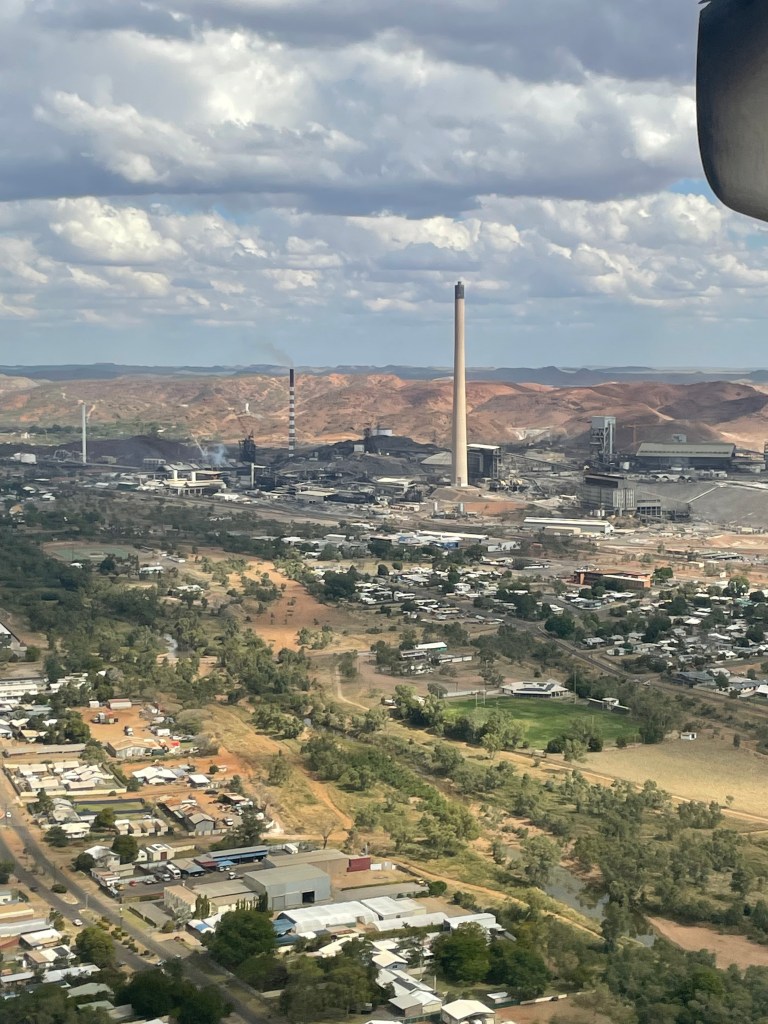
Mount Isa and mine with mountain ranges in the background.
Mount Isa, with Mount Isa Mine and Selwyn Ranges at top of image.
Photo: © Trisha Fielding 2022.
Perhaps if Devanny had been able to see Mount Isa from the air, as I had done when I flew in, she might not have thought it to be so devoid of colour? The cinnamon and rust coloured ridges of the Selwyn Range and the honey-brown earth were certainly there — in my eyes at any rate. Perhaps we really only see what we want to see?

I’ll admit I was lucky enough to have been shown around all the scenic parts of Mount Isa by my friends. I wish Devanny had seen those granite spheres at sunset.


* A very large irregular-shaped mass of igneous rock, especially granite, formed from an intrusion of magma at great depth.

Watching the last light in Normanton

On a road trip through the Gulf Savannah towns of North Queensland last year, I realised that light — or at times, the lack of it — deeply influences how I perceive the landscape around me.

A Rainbow Bee-eater bird at Normanton, Queensland
Rainbow Bee-eater at sunset, Normanton, Queensland. Trisha Fielding, 2021.

For the first four or five days of the trip, grey clouds muted the colours of the terrain. One place in particular — Copperfield Gorge, at Einasleigh — would have looked stunning had it not been for the heavy clouds that cast a dull light over the basalt walls of the gorge, making the water at the bottom look sinister, rather than refreshing. Sure, it was impressive in its scale, but it didn’t move me. By the time we reached Croydon, the clouds were long behind us and crisp blue skies reigned. I loved Croydon. It had a beautiful white light about it. A searing light. It’s the kind of light I have come to realise I really thrive on.

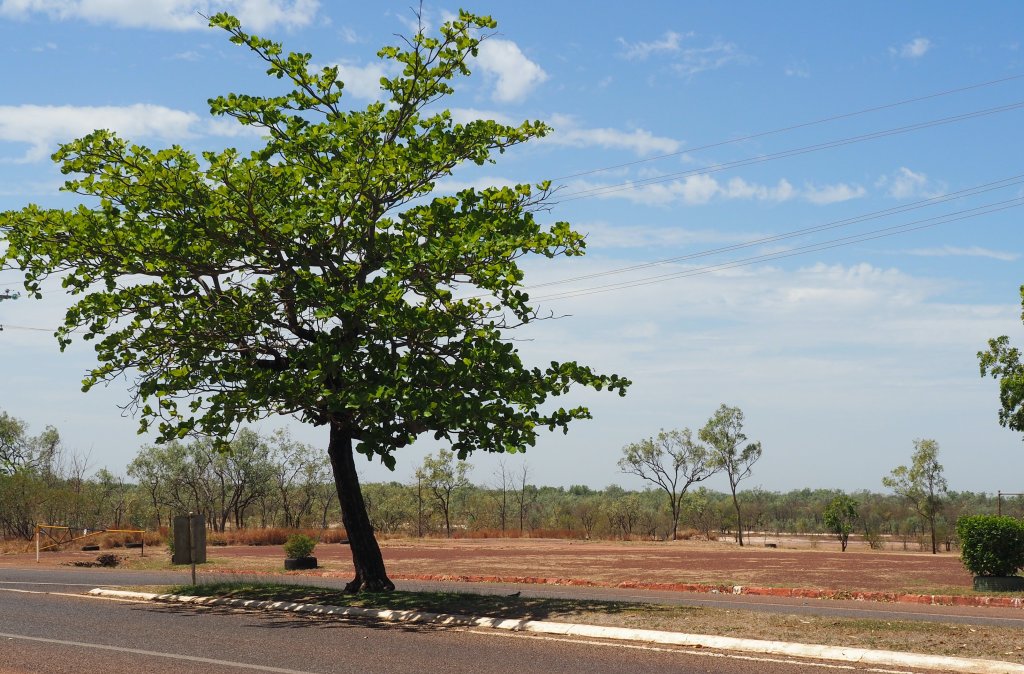
Another town in the Gulf of Carpentaria — Normanton, just over 150km north-east of Croydon — has it as well: this special kind of light. Situated on the Norman River (though it is many kilometres from the river’s mouth) Normanton sits on an ironstone ridge and is mostly surrounded by saltpans. The dirt is the colour of rust, and the sky is big and wide and cobalt blue. To the unobservant eye, it might seem just like any other dry, dusty outback town, but there are many before me who have experienced the beauty of the light in Normanton.

tree and landscape with blue sky and soft clouds
Normanton. Looking towards the Norman River. Photo: Trisha Fielding 2021.
Australian artist Ray Crooke (1922-2015) spent time in Normanton in the 1960s, in company with his friend, Percy Trezise. Crooke went on to produce a series of paintings of Normanton, many of which depict somewhat abstract figures, often in foreground shadows, but all with Normanton’s bright background light as a recurring feature. The Football Match, 1966, and Sunrise, Albion Hotel, Normanton, 1962, are just two examples of his style.

A two-page opening from the exhibition publication North of Capricorn: the Art of Ray Crooke
An opening from the exhibition publication North of Capricorn: the Art of Ray Crooke.
See source list below for full citation.

Another painting, Last Light, Normanton, is perhaps my favourite of Crooke’s paintings, and is held by the James Cook University Art Collection. Last Light, Normanton was featured in James Cook University Library’s 50 Treasures Exhibition in 2020. Writing for the exhibition, curator and art historian Ross Searle wrote that it was the “ramshackle townscape” and its Indigenous people that inspired Crooke’s Normanton series.

The eerie white light of the approaching night and the dark shadows of the looming streetscape at dusk held particular fascination for him. Ray Crooke had a special affinity with the Indigenous people of remote northern Australia and when situated in his paintings, as they do in the foreground of Last Light, Normanton, they have a calm, almost classical gravity.

Ross Searle, 2020.

It’s clear to me that Crooke loved both the landscape and the people of this part of North Queensland, but I think it was Crooke’s ability to capture the light that so entrances me. Rosemary Dobson, in the 1971 book Focus on Ray Crooke, notes that light is the “all-important ingredient” in each of Crooke’s paintings. In Dobson’s book, Crooke himself said that although the element of light was the most difficult of all the elements for a painter to master, he considered that it was light that gave a painting its “ageless quality, mystery, and indefinable presence”. Of his Normanton series, Crooke later wrote:

I became fascinated by the shapes in the foreground, the silhouetted shapes that the country produced, and looking from the shadow into the light. Everyone who goes to Normanton loves it because of the light.

Ray Crooke, 1977.
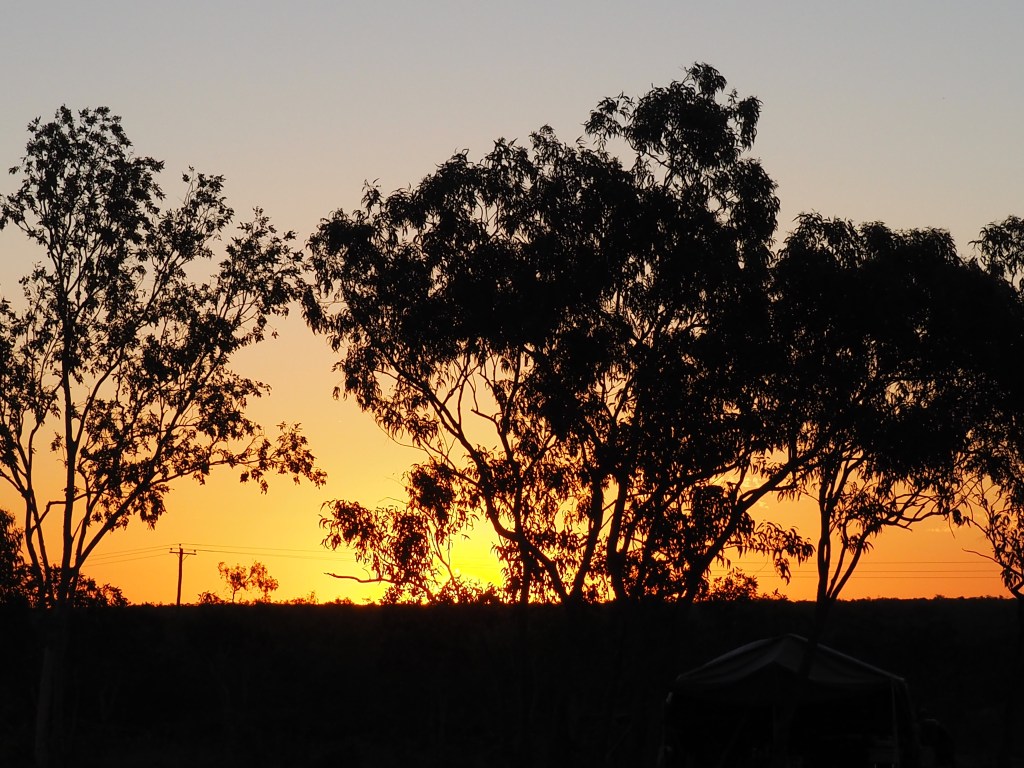
A sunset in Normanton, Queensland
Sunset, Normanton, Queensland. Trisha Fielding, 2021.

We saw first-hand this “eerie white light” that’s referred to in an above quote, from the shadows that preceded darkness, when we were standing out the back of a caravan park in Normanton watching the sun set. I knew then, that we were seeing the last light in Normanton exactly as Crooke had seen it and captured it in his painting. Normanton was a place where I felt somehow suspended in endless time… entranced by the beauty of the day’s last light.

Watching the last light in Normanton, Queensland
Watching the last light in Normanton, Queensland. Trisha Fielding, 2021.

Sources and further reading:

  • Dobson, Rosemary, Focus on Ray Crooke, University of Queensland Press, St Lucia, Queensland, 1971.
  • Gleeson, James, Ray Crooke: Australian Artist Editions, Collins, Sydney, 1972?
  • Searle, Ross, 50 Treasures: Celebrating 50 Years of James Cook University, James Cook University Library, Townsville, 2020.
  • Smith, Sue, North of Capricorn: the Art of Ray Crooke, Perc Tucker Regional Gallery, Townsville, 1997.

A day at Horseshoe Bay

One of my favourite places to go when we want to get out of town for the day, is Horseshoe Bay, on Magnetic Island. There are some great walking tracks here (some are easy, some are challenging); and there’s a “Butterfly Forest”, located next to the site of the old Horseshoe Bay School. It is a wetlands rehabilitation site, so if you go there after it’s recently rained, you can expect the track and other parts of the area to be pretty boggy, so wear appropriate footwear, and don’t forget your insect repellent!

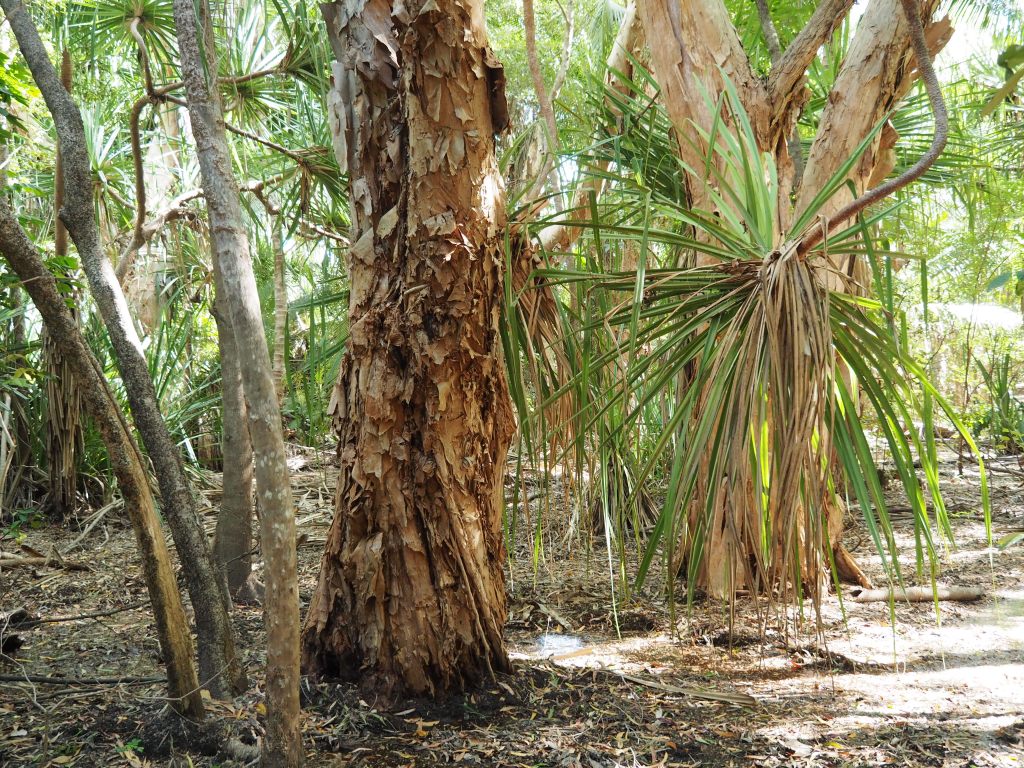
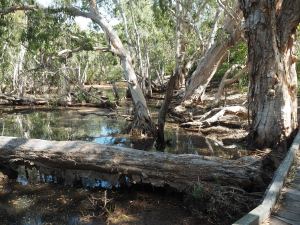
paperbark trees
Butterfly Forest walk, Horseshoe Bay. Trisha Fielding 2022.

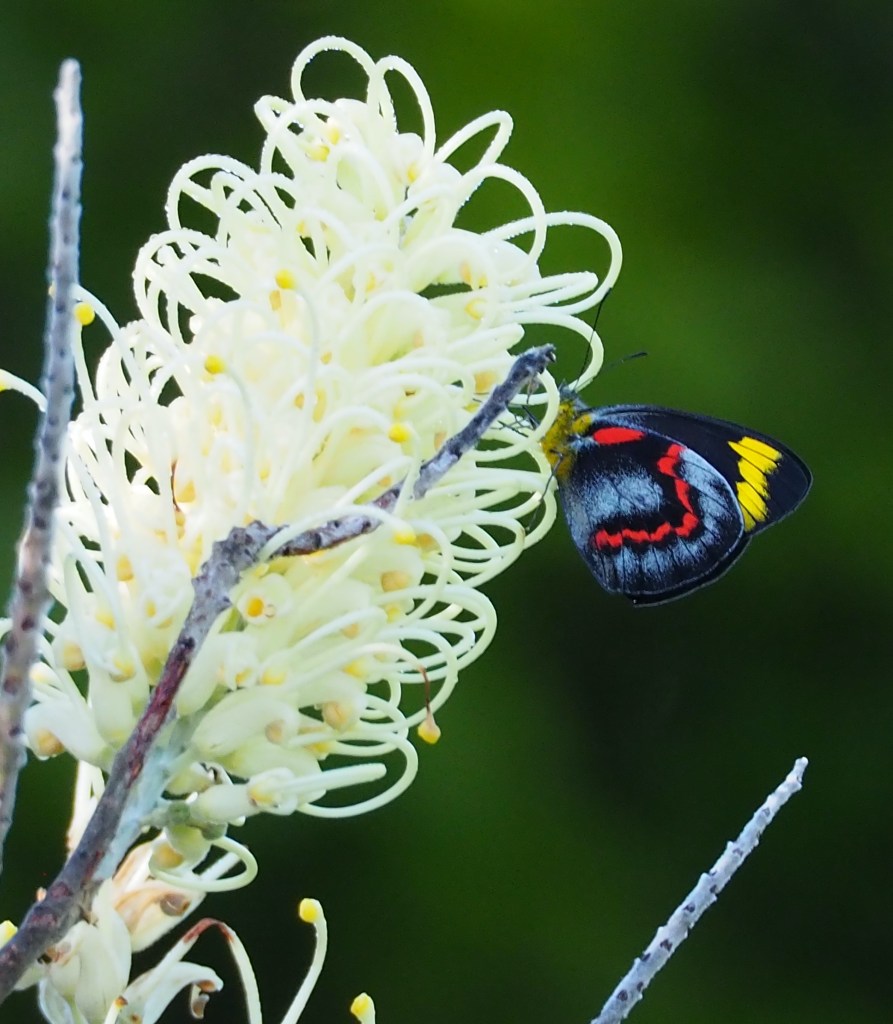
What butterflies you’ll see here does depend on what time of year you visit. On a recent trip, we saw a number of species here (and in the immediate vicinity) including Purple Crow [Euploea tulliolus], Blue Tiger [Tirumala hamata], Cruiser [Vindula arsinoe], Shining Oak-blue [Arhopala micale], Chequered Swallowtail [Papilio demoleus], and a Jezebel (possibly a Red-banded Jezebel) – [Delias mysis].

a close-up of a Blue Tiger butterfly with wings open
Blue Tiger, near Horseshoe Bay Lagoon. Trisha Fielding 2022.

The Horseshoe Bay Lagoon Conservation Park walk is another lovely walk – accessible off Horseshoe Bay Road, about 150-200 metres back from the beach. It’s an easy walk, on flat, sandy ground, with some really stunning trees – particularly the melaleucas and eucalypts. The track leads to a timber boardwalk across part of the lagoon itself, which allows you to fully appreciate this beautiful wetland landscape.

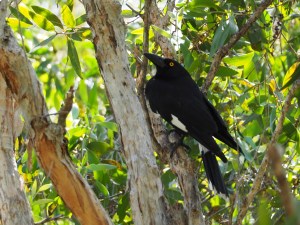
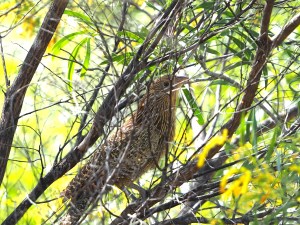
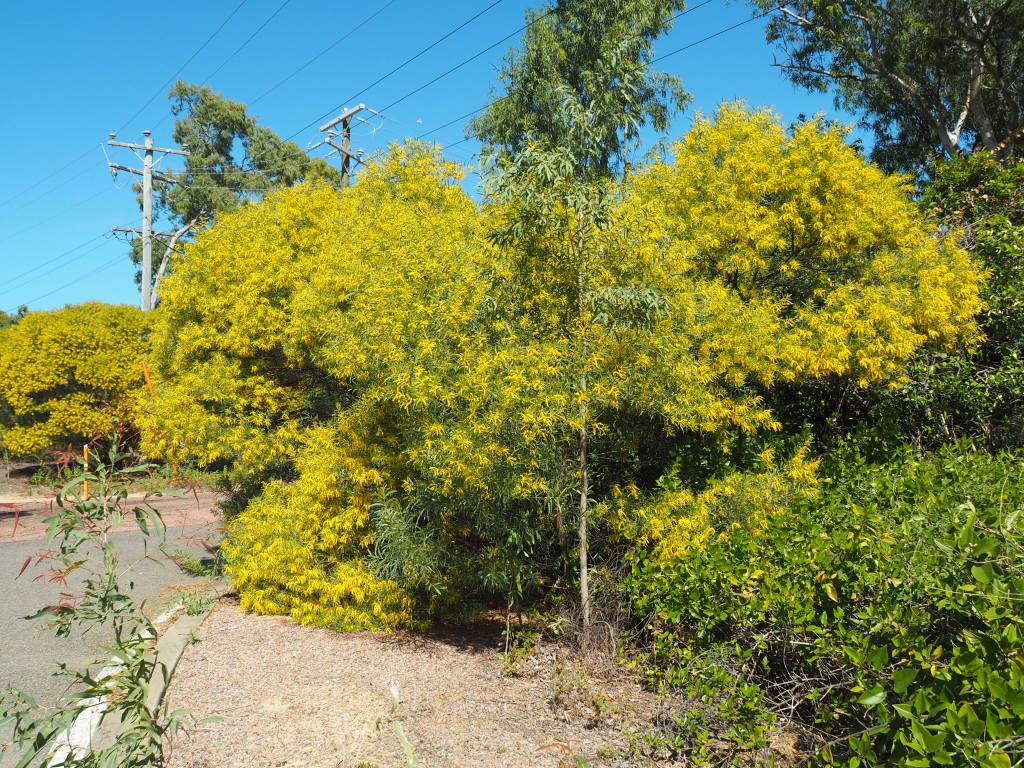
I wasn’t particularly on the lookout for birds on this walk, but we were lucky enough to spot a Pied Currawong, high up in a tree, about 20 metres away (thank goodness for zoom lenses!) and later, a Pheasant Coucal, hiding amongst an Acacia tree (Townsville Wattle).

Townsville Wattle tree
Acacia leptostachya (common name: Townsville Wattle), Horseshoe Bay.
Trisha Fielding 2022.

*Magnetic Island is just a 25-minute ferry ride from Townsville. You can catch a bus from the Nelly Bay ferry terminal over to Horseshoe Bay to explore these (and other) walks.

Beauty for its own sake

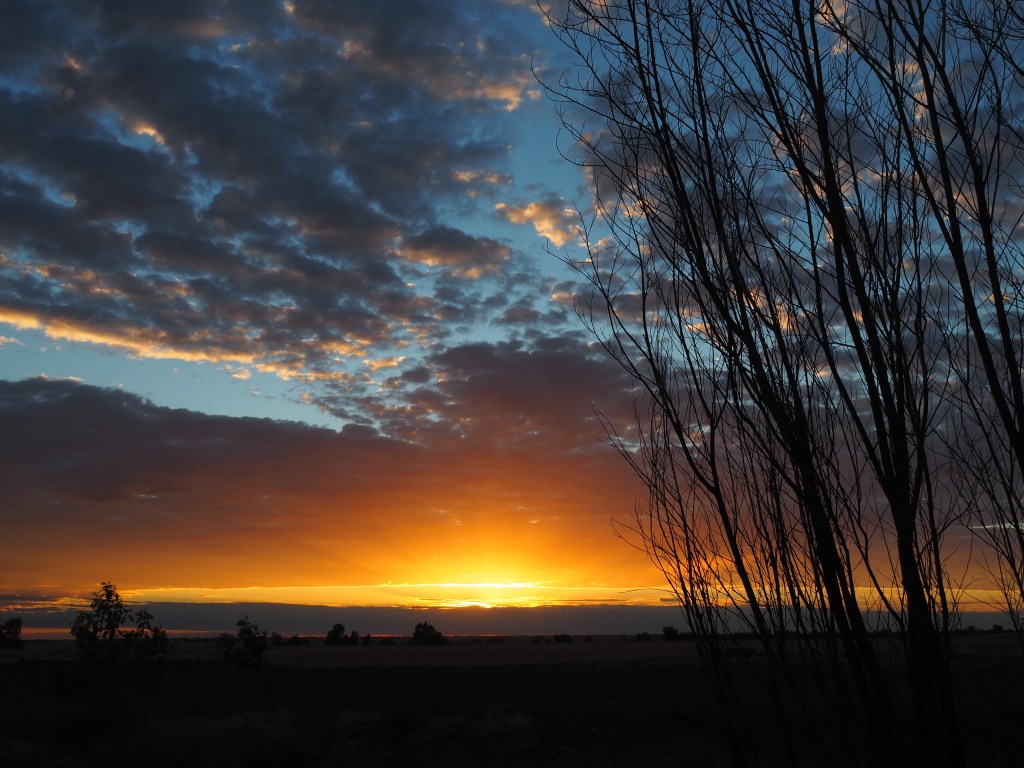
a sublime scene - a sunrise at Julia Creek, Queensland
Sunrise, Julia Creek, Queensland. Trisha Fielding, 2021.

For the past 25-ish years I’ve been writing about historical subjects, but lately I find I have veered off this familiar, comfortable path and strayed into new territory. A rekindled interest in photography has inadvertently sparked a new obsession for me – photographing and learning about the natural world. Through the lens of my camera, I am seeing such astonishing beauty around me – in the plants, landscapes, birds, bees and butterflies – that I’ve decided to just run with it… and start writing about all the beautiful things I’m photographing.

Butterflies are at the top of my list of obsessions – as anyone who follows my Instagram profile will already know – so there’ll be lots of photos and info about these remarkable little creatures. But I’ll also post about beautiful landscapes and architecture and trees and books, and basically whatever makes me feel inspired!

Dwell on the beauty of life. Watch the stars, and see yourself running with them.

Marcus Aurelius

You might find my writing style a bit different to what you’re used to from me as an historian (that’s if you’ve ever read anything I’ve written, before now). These new blog posts will be more observational, sometimes reflective, but I hope you’ll enjoy them. There’ll be loads of tie-ins to books/authors who’ve written about the natural world, and some posts will still have historical elements. I’ll continue to add new content to my other Blogs when inspiration strikes, and you can link to these Blogs from the top navigation menu.

So let’s see where this takes us…