
I love lighthouses, though I’m not entirely sure what it is about them that so fascinates me. Perhaps I see them as a symbol of resilience? They’re built to withstand everything that Mother Nature can throw at them. They’re solid, enduring, perpetual; in a world where constant change is inevitable.
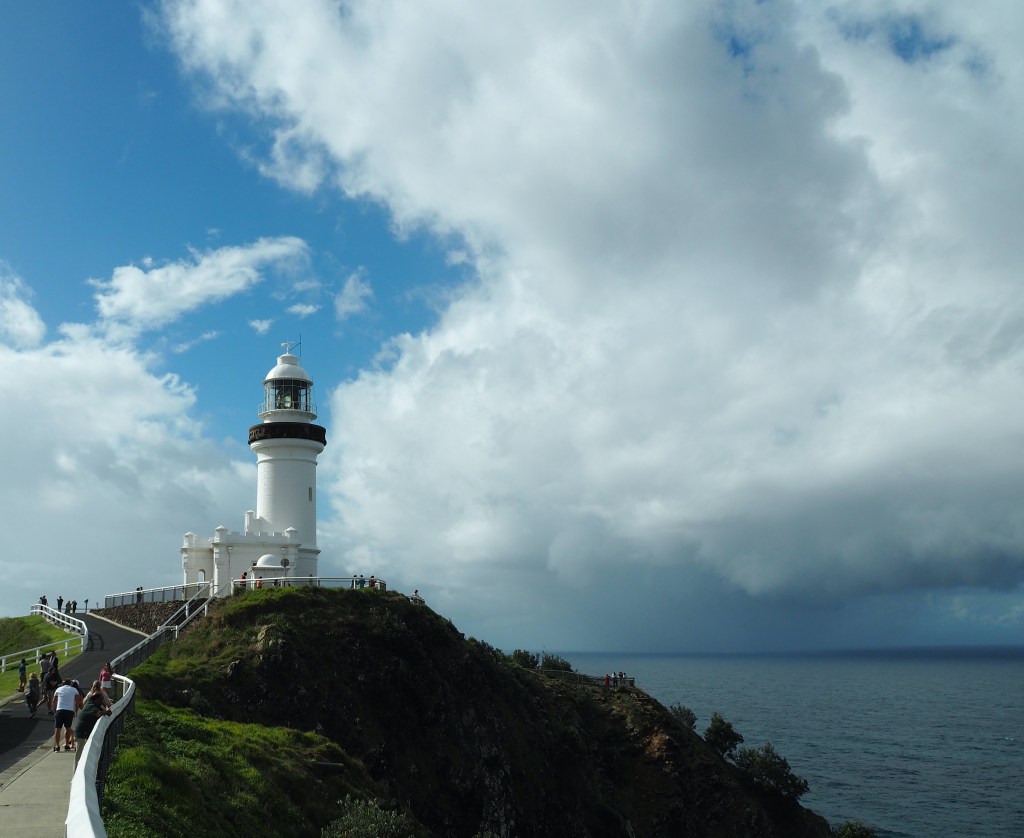
Perhaps another reason I love lighthouses is that getting to them can involve a bit of adventure. They’re often situated high up on some isolated, rugged stretch of coastline, where bracing winds whip sharply about your face and threaten to blow you off your feet!
I can think of no other edifice constructed by man as altruistic as a lighthouse. They were built only to serve.
George Bernard Shaw
I saw my first lighthouse when I was 20 years old, at Table Cape, near Wynyard in Tasmania. Overlooking Bass Strait, Table Cape Lighthouse is 25 metres tall and sits at an elevation of 180 metres above sea-level. It’s flanked by a picturesque patchwork of sprawling agricultural farmlands. I thought it was fantastic. Since then, we’ve visited many lighthouses, including those at Cape Cleveland, Fitzroy Island and Low Island (all in Queensland). These last three each involved boat rides, or hikes (or both) to get to them, and they were all totally worth the effort.

Cape Byron Headland – walk and lighthouse
Recently, I added another lighthouse to my list when my husband and I did the Cape Byron Headland walk. This walk, which takes in some truly stunning coastline, was the sole reason for our visit to Byron Bay. It is said to be the most visited lighthouse in Australia and attracts half a million visitors every year.
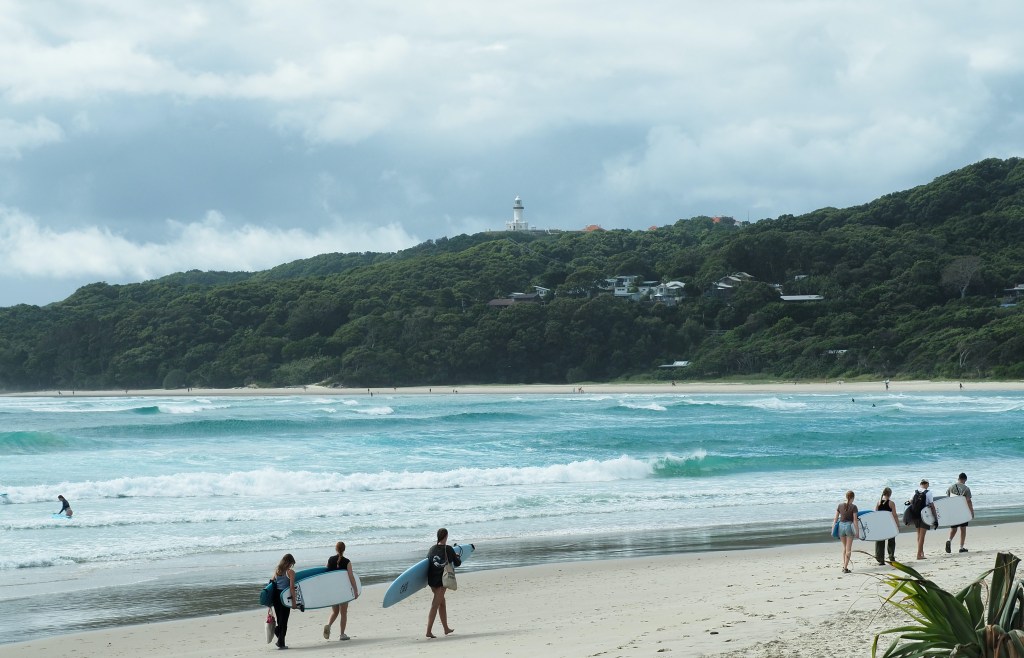
We started our walk near the Captain Cook lookout/picnic area. The first section of the walk begins with an elevated timber boardwalk that hugs the headland and soon opens up to an expansive view out over Clarkes Beach and Main Beach. Rather disappointingly, it was very overcast when we set out, so not the best weather for photographs, but we stopped there for a few snaps anyway before moving on.
After about 600 or so metres, you emerge onto a surf beach called The Pass. This is an excellent vantage point to watch surfers riding the waves. They seem to start off just out of sight around the headland, catch the break then ride the waves into the bay and into sight of spectators on the beach. It’s really quite something to see. They seem to appear rather miraculously, as if out of nowhere.

We had been hoping the weather would clear but while we were watching the surfers it started to rain. Just drizzle at first. We had packed some lightweight rain ponchos in our backpacks, but neither of us particularly wanted to have to put them on. No one else around us seemed to be bothered by the rain. Then it started to get a bit heavier. It wasn’t exactly a downpour, but it was enough to soak you if you were in it for long enough, and we had camera gear with us, so we decided, sensibly, to put the raincoats on. So off we went, two sensible nerds wearing what appeared to be blue plastic bags, looking very out of place amongst the bronzed, but slightly shivering beachgoers.


From here, the track takes in a short section of bushland called Palm Valley and then the walk begins to climb in earnest. All the walking tracks on the Lighthouse walk are either paved or stepped in some way and are very well maintained. A good portion of the track is quite steep, but there are plenty of places to stop for a breather and take in the stunning views. One of the highlights for me was seeing so many beautiful Coast Banksias, clinging stubbornly to the cliffs.

After about 500 metres, the next beach is Wategos Beach. There are covered picnic shelters here with BBQ facilities and given finer weather, it would have been a beautiful spot for a swim. The steps at the end of the beach are where you start to really climb. Part way up we came across a young woman who was perched rather precariously on a narrow sliver of ground on the outside (seaward side) of the guard rail. She had a camera, and I often stop to chat with people who have proper cameras (as opposed to just taking photos on a mobile phone). I asked her if she had “got any good shots?” She replied that she was filming her partner who was “foiling”. That’s surfing, but with a hydrofoil attached to the surfboard, rather than a fin. I guess you learn something new every day.
The next beach is Little Wategos, and there’s a great lookout here with panoramic views from a windswept headland. Once you climb back up the staircases from here, it’s onwards and upwards to the lighthouse. There are a lot more stairs to negotiate, but after a few hundred metres, you’ll arrive at the easternmost point on the Australian mainland. The day we did this walk was a public holiday, so the walking track was busy. At this lookout there were lots of people milling about, waiting to take selfies in front of the landmark sign. We decided to stop here for a drink break and wait for the crowds to die down. This didn’t happen, and after about half an hour of politely waiting for the same group to move on, we just snapped a few quick shots and went on our way.

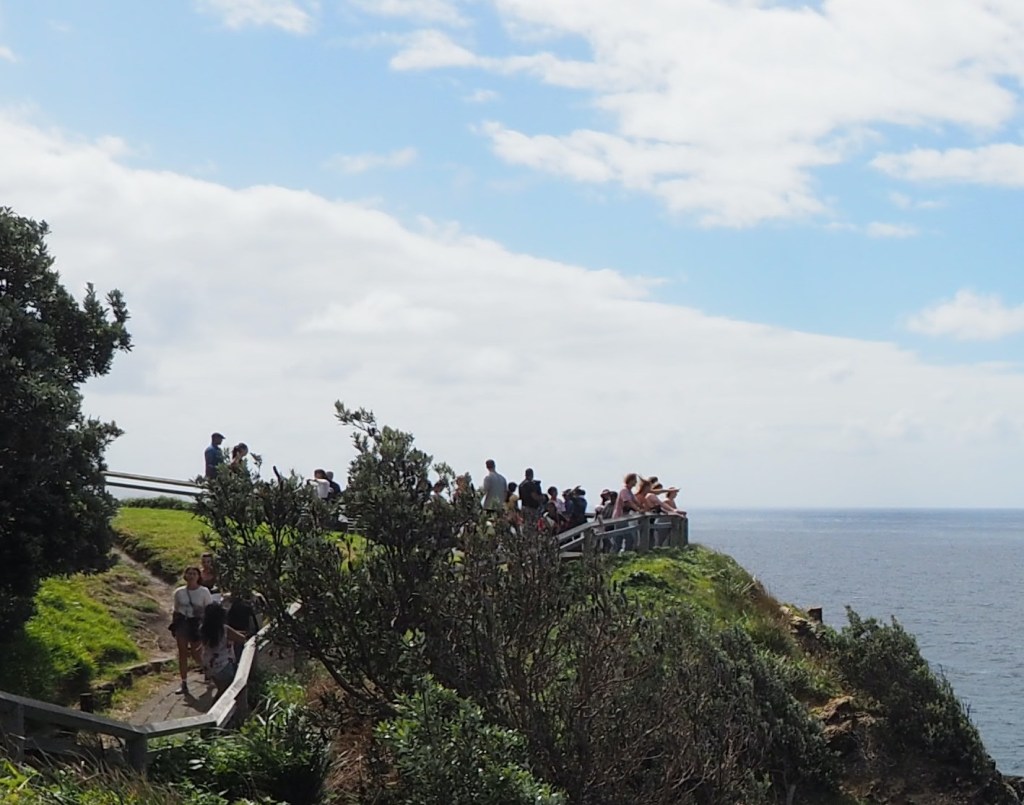

From here, the last few hundred metres of the climb up to the lighthouse felt like a bit of a chore. It’s quite steep, and my calf muscles were burning by the time we reached the Lighthouse. But by this time, the sun had come out, so I was looking forward to getting some decent photographs!
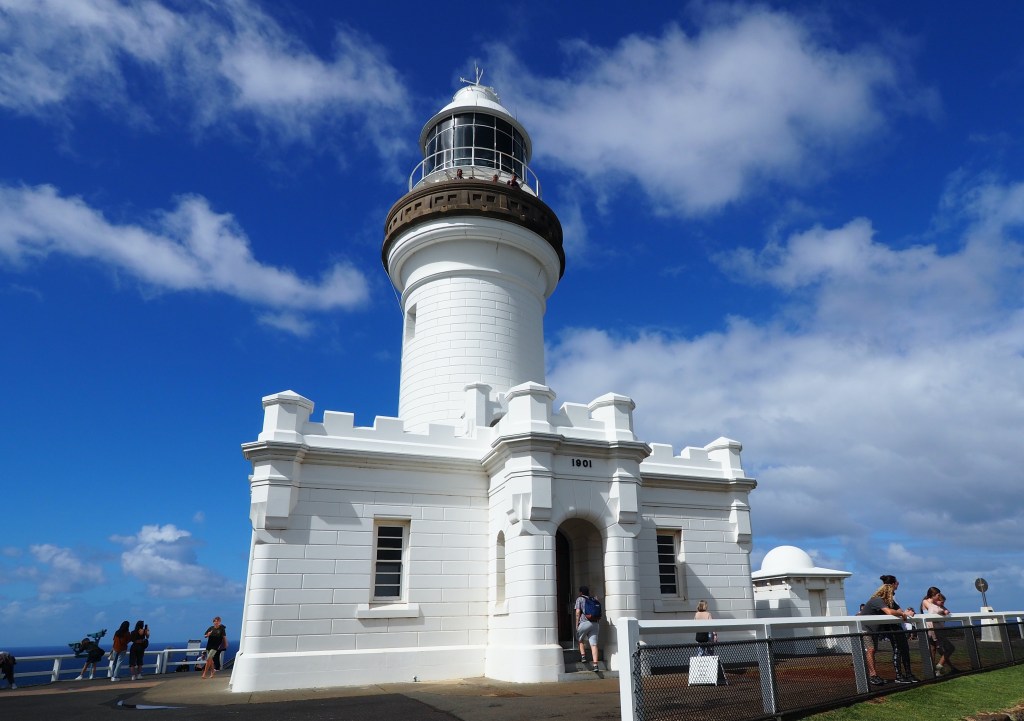
Cape Byron Lighthouse
Completed in 1901, the Cape Byron light is visible from 40km away – and is the brightest on the Australian coastline. Built of pre-cast concrete blocks, the lighthouse is 22 metres high, and sits at an elevation of 118 metres above sea level. The lighthouse was operated by lightkeepers until 1989, but since then the light has been automated. If you’re interested in the design of this lighthouse, the National Archives of Australia hold architectural plans for the Cape Byron Lighthouse. They also hold a Visitor’s Book from the lighthouse. The one covering the years 1902-1924 has been fully digitised (all 614 pages of it!)
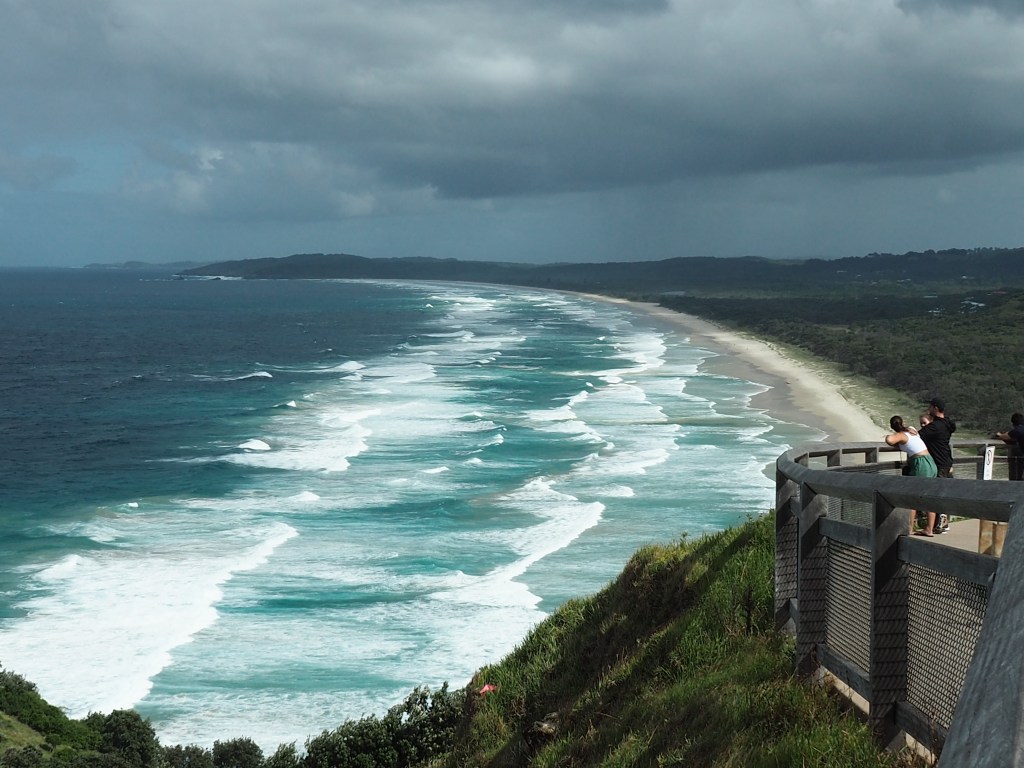
The walk back down takes you along another headland with sweeping views of Tallow Beach, before heading off into bushland. More upward tracks. Then some downward tracks. Then upwards again. Then just when you think it might be all downhill from there, the track climbs again, though nothing as steep as the last few hundred metres to the lighthouse had been. It’s about 1.4 km from the lighthouse and down the Tallow Ridge Track, and many people just take the bitumen road back down from the lighthouse; but the walk through the coastal forest here is a much nicer way to finish off the walk.

Most tourist guides/info estimate that the Cape Byron Headland walk will take about 2 hours, but we took about 2.5 hours. It depends on your fitness level. The NSW National Parks and Wildlife website classify it as Grade 3 track, which is technically moderate, and suitable for most ages and fitness levels. All up, the entire outing took us about 4 hours. But that included a 30-minute stop at the easternmost point lookout as well as about an hour break for lunch at the café near the lighthouse. Not to mention quite a few stops to take photographs. Over the four hours I clocked up 9,920 steps on my Fitbit.
It turns out we were lucky to have been able to do this walk on the day we did, because the very next day, the walking track was to be closed for several months, for maintenance. Apart from the stunning coastline and the beautiful lighthouse, we also saw pods of dolphins (far down below us in the ocean) and we saw a species of tiny butterfly that we hadn’t seen before!

Oh, and in case you don’t feel like walking, you can drive up to the lighthouse complex. There is a very small carpark up there, and it costs $8 for a maximum stay of one hour.
 Travels in the Sublime